

Medicare Supplement Plans for Veterans: The Complete Guide
Table of Contents:
What Is a Medicare Supplement (Medigap) Plan?
Can Veterans Have Both VA Health Care and a Medicare Supplement Plan?
Who Should Consider a Medicare Supplement Plan?
Who May Not Need a Medicare Supplement Plan?
Plan G vs. Plan N: Which Medicare Supplement Plan Is Better for Veterans?
Which Plan Should Veterans Choose?
Medicare Supplement vs. Medicare Advantage for Veterans
When Is the Best Time to Enroll in a Medicare Supplement Plan?
Can veterans have both VA health care and a Medicare Supplement plan?
Does a Medicare Supplement plan cover care received at the VA?
Is Plan G better than Plan N for veterans?
Can I see any doctor with a Medicare Supplement plan?
Do I need a Medicare Supplement plan if I only use the VA?
Does a Medicare Supplement plan include prescription drug coverage?
Can I switch from Medicare Advantage to a Medicare Supplement plan later?
If you receive your health care through the U.S. Department of Veterans Affairs (VA), do you really need a Medicare Supplement plan?
It's one of the most common questions veterans ask as they approach Medicare eligibility. While some veterans rely almost entirely on VA health care, others want the flexibility to see civilian doctors, receive care at non-VA hospitals, or have additional financial protection while traveling or living part-time in another state.
The right answer depends on your individual health care needs, where you receive treatment, and how much flexibility you want in choosing your providers.
In this complete guide, you'll learn how Medicare Supplement (Medigap) plans work alongside VA health care, when they may be worth considering, who may not need one, and how to decide whether a Medigap plan is the right fit for your situation.
If you're new to Medicare, we recommend starting with our Medicare 101 for Veterans guide before continuing with this article.
Key Takeaways
✅ Veterans can have both VA health care and a Medicare Supplement (Medigap) plan.
✅ Medigap only helps pay Medicare-approved costs—it does not pay for services received through the VA.
✅ Veterans who frequently receive care outside the VA may benefit from a Medicare Supplement plan.
✅ Veterans who receive nearly all of their health care through the VA may not need Medigap coverage.
✅ Choosing between Medicare Supplement and Medicare Advantage depends on your health care needs, budget, and how you prefer to receive medical care.
What Is a Medicare Supplement (Medigap) Plan?
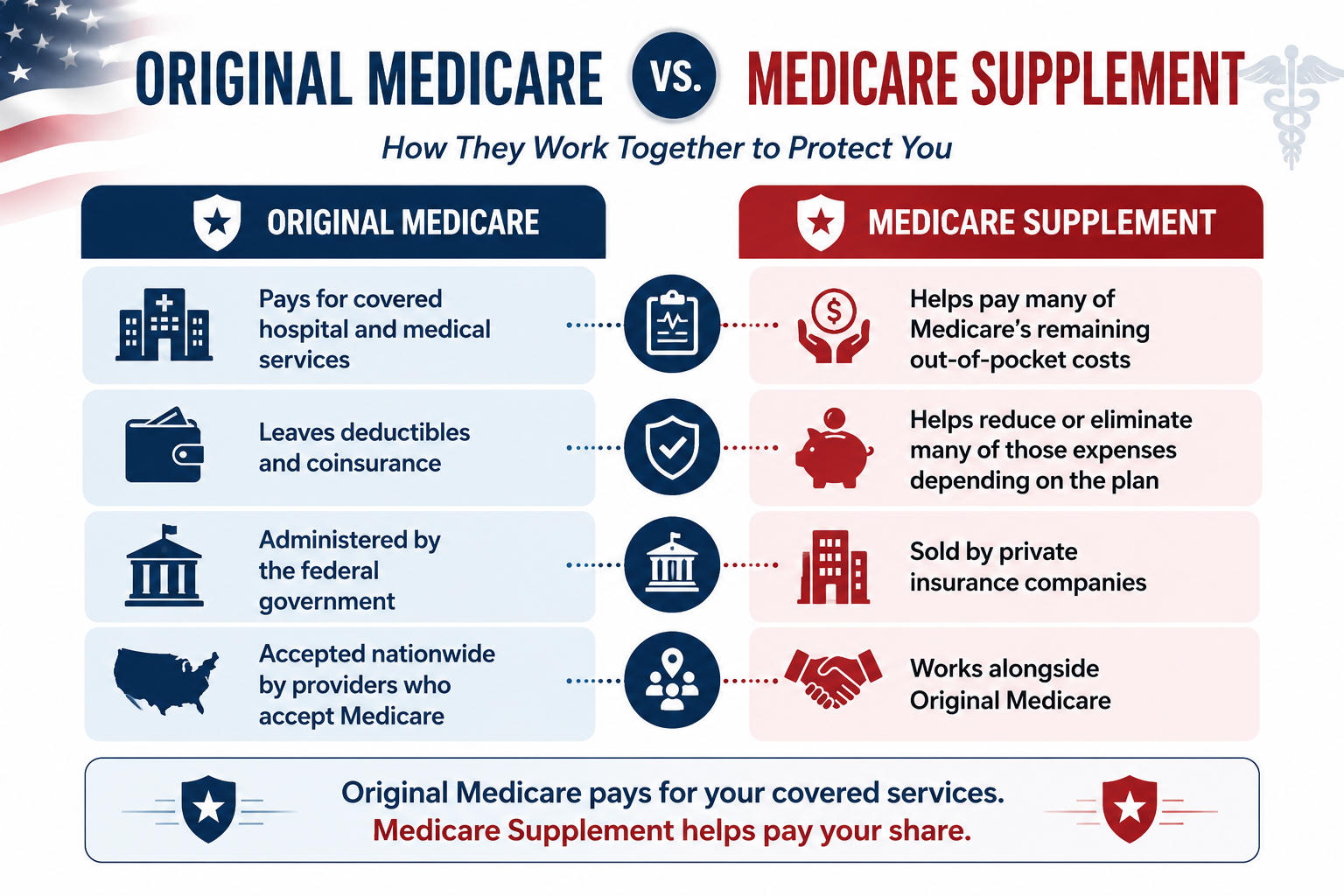
A Medicare Supplement plan—commonly called Medigap—is private insurance designed to help pay many of the out-of-pocket costs that Original Medicare (Part A and Part B) doesn't cover.
Original Medicare provides excellent coverage for hospital and medical services, but beneficiaries are still responsible for certain deductibles, coinsurance, copayments, and other expenses.
A Medicare Supplement plan helps reduce many of those remaining costs, giving you greater financial protection and more predictable medical expenses.
Depending on the plan you choose, Medigap may help pay for:
Medicare Part A coinsurance and hospital costs
Medicare Part B coinsurance or copayments
Blood (first three pints)
Skilled nursing facility coinsurance
Medicare Part A hospice coinsurance
Medicare deductibles (certain plans)
Foreign travel emergency coverage (certain plans)
Unlike a Medicare Advantage plan, a Medicare Supplement plan does not replace Original Medicare. Instead, it works alongside Medicare to help cover your share of Medicare-approved expenses.
One of the biggest advantages of Medigap is provider flexibility. In most cases, you can see any physician or hospital in the United States that accepts Medicare, without worrying about provider networks or referrals.
Can Veterans Have Both VA Health Care and a Medicare Supplement Plan?
Yes.
Many veterans choose to keep their VA health care while also enrolling in Original Medicare and a Medicare Supplement plan.
However, it's important to understand that VA health care and Medicare generally do not pay for the same medical services at the same time.
Instead, they work independently.
In most situations:
Care received at a VA medical facility is covered through your VA health benefits.
Care received at a non-VA provider may be covered by Medicare if the services are Medicare-approved.
A Medicare Supplement plan helps pay your share of Medicare-covered costs when you receive care outside the VA system.
Having both VA health care and a Medicare Supplement plan can provide greater flexibility, especially if you want access to civilian physicians, specialists, or hospitals.
For example:
Mike is a retired Air Force veteran who receives most of his routine care through the VA.
During the winter, he spends several months in Arizona and prefers seeing civilian specialists while he's away from home.
Because Mike has Original Medicare and a Medicare Supplement plan, he can receive care from Medicare-participating providers outside the VA while helping reduce many of his Medicare out-of-pocket expenses.
Who Should Consider a Medicare Supplement Plan?
Every veteran's health care needs are unique.
Some veterans are perfectly satisfied receiving all of their care through the VA. Others value having additional options when they need medical care outside the VA system.
A Medicare Supplement plan may be worth considering if you:
Want the freedom to see civilian physicians who accept Medicare.
Travel frequently throughout the United States.
Live in multiple states during the year.
Want more predictable out-of-pocket medical expenses.
Live far from the nearest VA medical center.
Prefer additional flexibility if appointments at the VA are delayed.
Want the peace of mind of having nationwide Medicare coverage outside the VA.
For these veterans, a Medicare Supplement plan can provide an additional layer of financial protection whenever Medicare is being used.
Who May Not Need a Medicare Supplement Plan?
A Medicare Supplement plan isn't the right choice for every veteran.
Depending on your circumstances, paying a monthly Medigap premium may provide little additional value.
You may decide a Medicare Supplement plan isn't necessary if you:
Receive nearly all of your health care through the VA.
Rarely visit civilian physicians.
Are satisfied with your current access to VA providers.
Have comprehensive coverage that coordinates with Medicare, such as TRICARE For Life.
Prefer lower monthly premiums and are comfortable with a Medicare Advantage plan.
Choosing not to purchase a Medicare Supplement plan doesn't necessarily mean you're making the wrong decision.
The goal is to select coverage that fits your health care needs—not someone else's.
Every veteran's situation is different.
That's why understanding how VA benefits, Medicare, Medicare Supplement, and Medicare Advantage work together is so important before making a decision.
If you're also considering a Medicare Advantage plan, be sure to read our Medicare Advantage for Veterans guide to compare both options.
Plan G vs. Plan N: Which Medicare Supplement Plan Is Better for Veterans?
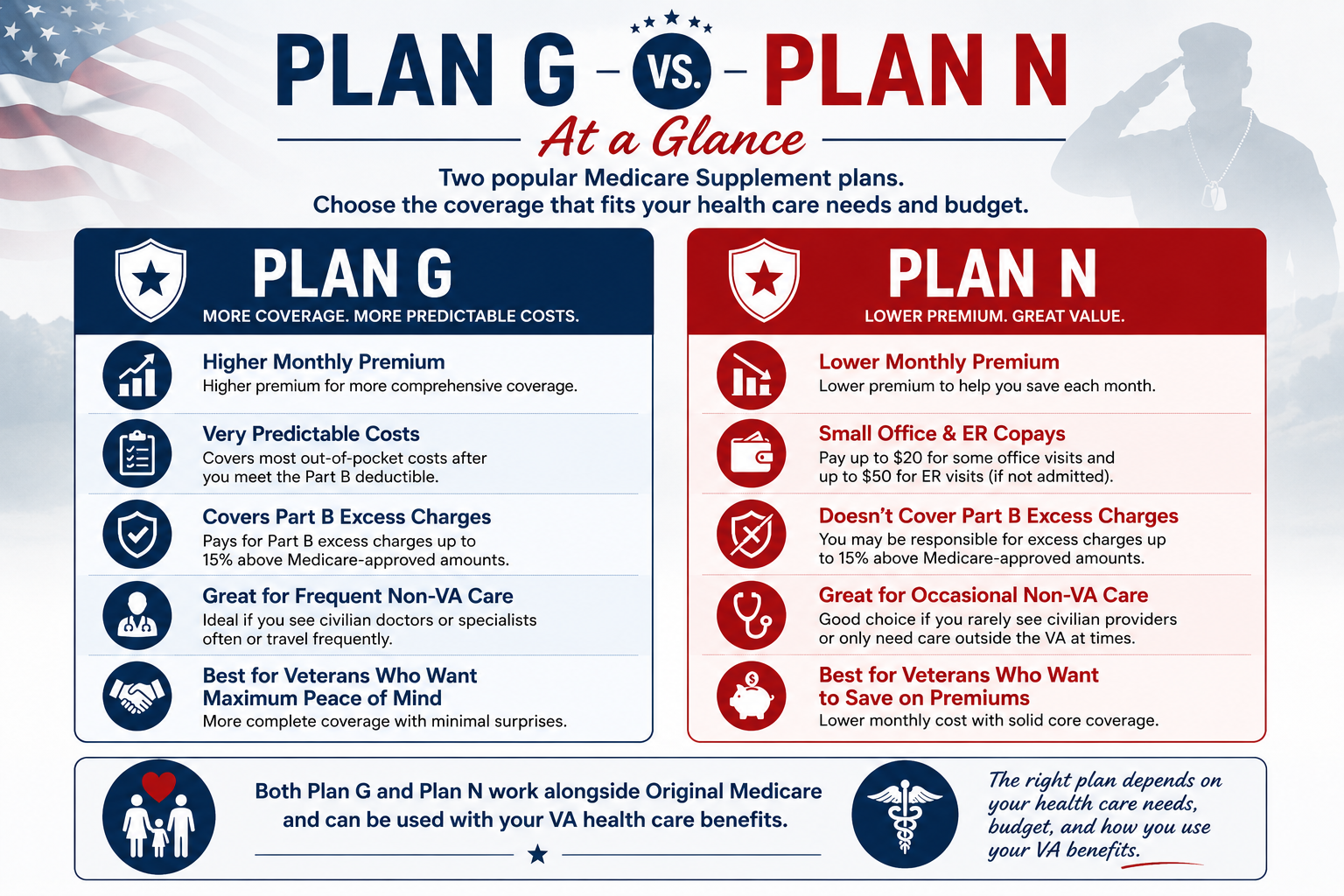
When comparing Medicare Supplement plans, Plan G and Plan N are the two most popular options for new Medicare beneficiaries. Both provide nationwide access to any doctor or hospital that accepts Medicare and help reduce many of the out-of-pocket costs left behind by Original Medicare.
The biggest differences come down to monthly premium, out-of-pocket costs, and how often you expect to receive medical care outside the VA.
If you rely heavily on VA health care and only occasionally visit civilian providers, Plan N may offer a good balance between coverage and affordability. If you frequently receive care outside the VA or simply want more predictable medical expenses, Plan G may provide greater peace of mind.
Which Plan Should Veterans Choose?
There isn't a single "best" Medicare Supplement plan for every veteran.
Plan G may be a good fit if you:
Frequently receive care outside the VA.
Prefer predictable out-of-pocket medical expenses.
Travel often throughout the United States.
Want comprehensive Medicare Supplement coverage.
Plan N may be worth considering if you:
Primarily use VA health care.
Visit civilian doctors only occasionally.
Want to reduce your monthly premium.
Don't mind paying small copays for some office or emergency room visits.
At Veterans Legacy Center, we believe the right Medicare Supplement plan depends on your health care needs, budget, and how you use your VA benefits. Before enrolling, it's important to compare your options and understand how each plan works alongside your existing coverage.
Medicare Supplement vs. Medicare Advantage for Veterans
Many veterans wonder whether they should choose a Medicare Supplement (Medigap) plan or a Medicare Advantage plan. The right choice depends on how you receive your health care, your budget, and how often you seek care outside the VA system.
A Medicare Supplement plan works alongside Original Medicare (Part A and Part B) and helps pay many of Medicare's deductibles, coinsurance, and copayments. One of its biggest advantages is flexibility—you can generally see any doctor or hospital in the United States that accepts Medicare without worrying about provider networks.
A Medicare Advantage plan replaces Original Medicare and is offered by private insurance companies. Many plans include additional benefits such as dental, vision, hearing, prescription drug coverage, fitness memberships, and over-the-counter (OTC) allowances. However, most Medicare Advantage plans use provider networks, meaning your choice of doctors and hospitals may be more limited.
For veterans who receive nearly all of their care through the VA, a Medicare Advantage plan's extra benefits may provide additional value while keeping monthly premiums low. On the other hand, veterans who frequently visit civilian providers or want the broadest access to Medicare-participating physicians often prefer a Medicare Supplement plan.
Neither option is universally better. The best choice depends on your individual health care needs, where you receive care, and the level of financial protection you're looking for.
If you're considering Medicare Advantage, be sure to read our Medicare Advantage for Veterans guide, where we explain how these plans work with VA health care, TRICARE For Life, and Original Medicare.
When Is the Best Time to Enroll in a Medicare Supplement Plan?
The best time to enroll in a Medicare Supplement plan is during your Medicare Supplement Open Enrollment Period.
This six-month enrollment window begins when you're 65 or older, enrolled in Medicare Part B, and eligible for a Medicare Supplement plan. During this time, insurance companies generally cannot deny you coverage or charge you a higher premium because of pre-existing health conditions.
If you apply after your open enrollment period ends, you may have to answer health questions and could be subject to medical underwriting in many states. Depending on your health, you could be declined coverage or offered a higher premium. Certain situations, known as Guaranteed Issue Rights, may still allow you to purchase a Medicare Supplement plan without medical underwriting.
Even if you primarily use VA health care today, it's worth understanding your enrollment options before making a decision. Waiting too long could limit your choices later if your health care needs change.
If you're still deciding whether to enroll in Medicare Part B, we recommend reading our article, Do Veterans Need Medicare Part B? to better understand how your enrollment decisions may affect your future Medicare options.
FAQ's
Can veterans have both VA health care and a Medicare Supplement plan?
Yes. Many veterans choose to keep their VA health care while enrolling in Original Medicare and a Medicare Supplement plan. While the two generally don't pay for the same services at the same time, they can complement one another by expanding your health care options.
Does a Medicare Supplement plan cover care received at the VA?
No. Medicare Supplement plans only help pay your share of Medicare-covered services. They do not pay for medical care received through VA health care facilities.
Is Plan G better than Plan N for veterans?
Neither plan is better for every veteran. Plan G generally offers more comprehensive coverage with fewer out-of-pocket expenses, while Plan N typically has lower monthly premiums but includes certain copays and doesn't cover Medicare Part B excess charges.
Can I see any doctor with a Medicare Supplement plan?
In most cases, yes. As long as the doctor or hospital accepts Medicare, you can generally receive care anywhere in the United States without worrying about provider networks.
Do I need a Medicare Supplement plan if I only use the VA?
Not necessarily. If you receive nearly all of your health care through the VA and are satisfied with your coverage, you may decide that paying an additional monthly premium for a Medicare Supplement plan isn't necessary.
Does a Medicare Supplement plan include prescription drug coverage?
No. Medicare Supplement plans don't include prescription drug coverage. Many veterans receive prescription benefits through the VA, while others enroll in a separate Medicare Part D plan if needed.
Can I switch from Medicare Advantage to a Medicare Supplement plan later?
Possibly, but depending on when you apply, you may be subject to medical underwriting unless you qualify for a Guaranteed Issue Right. That's why it's important to understand your options before enrolling.
Final Thoughts
Choosing a Medicare Supplement plan is a personal decision, and there's no one-size-fits-all solution for every veteran.
Some veterans receive nearly all of their care through the VA and may have little need for additional coverage. Others appreciate the flexibility of seeing civilian doctors, traveling with confidence, and having predictable out-of-pocket medical expenses through a Medicare Supplement plan.
Understanding how VA health care, Original Medicare, Medicare Supplement plans, and Medicare Advantage work together can help you make an informed decision based on your unique health care needs—not someone else's.
If you're unsure which option is right for you, Veterans Legacy Center is here to help.
Schedule Your Free Medicare Benefits Review
Whether you're comparing Plan G vs. Plan N, deciding between Medicare Supplement and Medicare Advantage, or simply wondering how Medicare works with your VA benefits, we're happy to answer your questions.
During your no-cost, no-obligation Medicare Benefits Review, we'll:
Review your current Medicare and VA coverage.
Explain how Medicare Supplement and Medicare Advantage plans work.
Discuss your eligibility and enrollment options.
Compare plans available in your ZIP code.
Help you determine which option best fits your health care needs and budget.
Schedule your free Medicare Benefits Review today and make an informed decision with confidence.