Veteran Burial & Cremation Planning for Veterans & Families
Learn how VA burial & cremation benefits work, what families may still need to prepare for, and how preplanning can help reduce emotional and financial stress for loved ones.
Why Many Veterans & Families Choose to Plan Ahead
Planning ahead for burial or cremation services can help veterans and their families avoid rushed decisions during one of life’s most difficult moments.
Many families are surprised to learn that while the VA provides valuable burial benefits for eligible veterans, there are still funeral, cremation, transportation, and service-related expenses that families may need to prepare for.
At Veterans Legacy Center, we help veterans and their families understand available burial and cremation planning options, explain VA burial benefits, and guide families through the planning process with dignity and compassion.
What VA Burial Benefits May Cover
Burial Space
Free burial in a VA National Cemetery is one of the most significant benefits available to veteran service members, their spouses, and their eligible family members. This benefit ensures that those who have served their country are honored with a dignified and respectful final resting place without imposing a financial burden on their families
Headstone or Marker
Upright headstones in granite or marble measure 42" long, 13" wide, and 4" thick, weighing about 230 pounds. Variations in stone color and veining may occur, with Lithochrome used for inscriptions in private cemeteries. Flat grave markers in granite or marble are 24" long, 12" wide, and 4" thick, weighing approximately 130 pounds.
Military Funeral Honors
Military Funeral Honors are ceremonially rendered to honor deceased veterans. This tribute includes folding and presenting the American flag and playing "Taps." At least two uniformed military personnel participate. Families must request this service, which symbolically acknowledges the veteran’s service to the United States.
Opening & Closing the Grave
Opening and closing the grave involves preparing the burial site for a service and properly sealing it afterward. This process includes digging the grave prior to the ceremony and refilling it once the casket or urn is placed. This essential service is handled with respect and care to honor the deceased and is free to Veterans.
Presidential Memorial Certificate
The Presidential Memorial Certificate (PMC) is an engraved paper certificate signed by the current President of the United States that honors the memory of a deceased honorably discharged veteran. Families may request one or multiple certificates as a lasting tribute to the veteran's military service and sacrifice to our nation.
United States Burial Flag
A United States flag is provided at no cost to drape the casket or accompany the urn of a deceased veteran. This flag symbolizes the nation’s respect and gratitude for the veteran’s service. After the service, the flag can be kept by the next of kin as a cherished keepsake.
Perpetual Care
Perpetual care for veterans' graves in VA national cemeteries includes ongoing maintenance and landscaping to ensure dignified resting places. This service is provided at no cost to families, reflecting the nation’s commitment to honorably commemorate the service and sacrifice of its military members indefinitely.
Burial Allowances
The burial allowance for veterans provides financial assistance for funeral and interment costs. Eligibility requires discharge under conditions other than dishonorable, with varying reimbursement based on whether the death was service-connected. The allowance may also cover plot-interment costs in private cemeteries.
21 Gun Salute
The 21-gun salute is a ceremonial honor given at military funerals and significant national occasions, symbolizing respect and gratitude. This tribute involves the firing of guns or cannons in a series and is one of the highest honors bestowed, reflecting deep appreciation for the service rendered by military personnel.
What Families May Still Be Responsible For:
While VA burial benefits are valuable, families are often still responsible for many funeral or cremation-related expenses depending on the situation. This is why many veterans and their families choose to explore planning options ahead of time.
Funeral home service fees
Cremation costs
Caskets or urns
Transportation
Viewing or visitation services
Memorial services
Flowers and printed materials
Death certificates
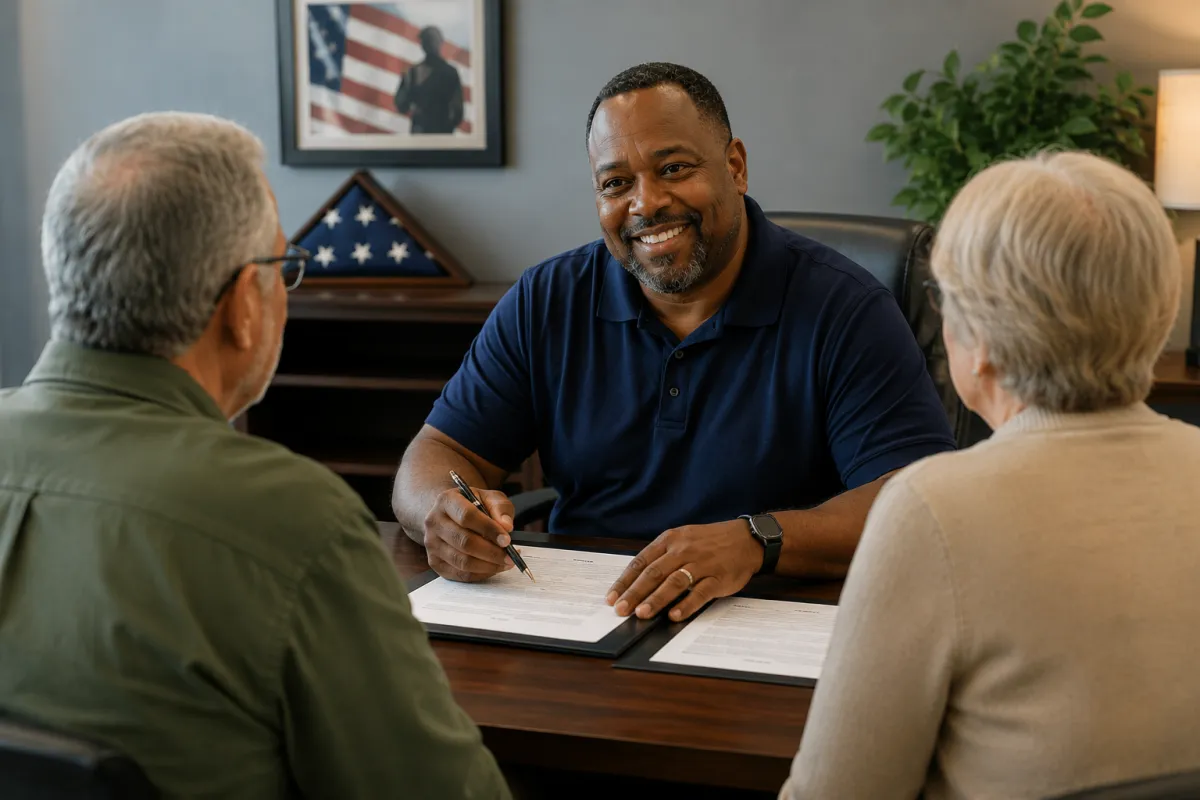
"We help Veterans and their families make tomorrow's decisions today."
Burial or Cremation Planning
Traditional Burial Planning
Traditional burial planning may include funeral services, viewing or visitation, cemetery burial, military honors, and casket selection.
Many families choose traditional burial because it allows for a formal service and permanent burial location for loved ones to visit.
Cremation Planning
Cremation planning may include direct cremation, memorial services, urn placement, scattering options, or burial after cremation.
Many veterans and families choose cremation for its flexibility, simplicity, and affordability.

Meet Daniel Moore
Daniel Moore is a U.S. Navy Veteran and Veterans Family Services Counselor who has been helping veterans and their families understand their burial and cremation planning options since 2015.
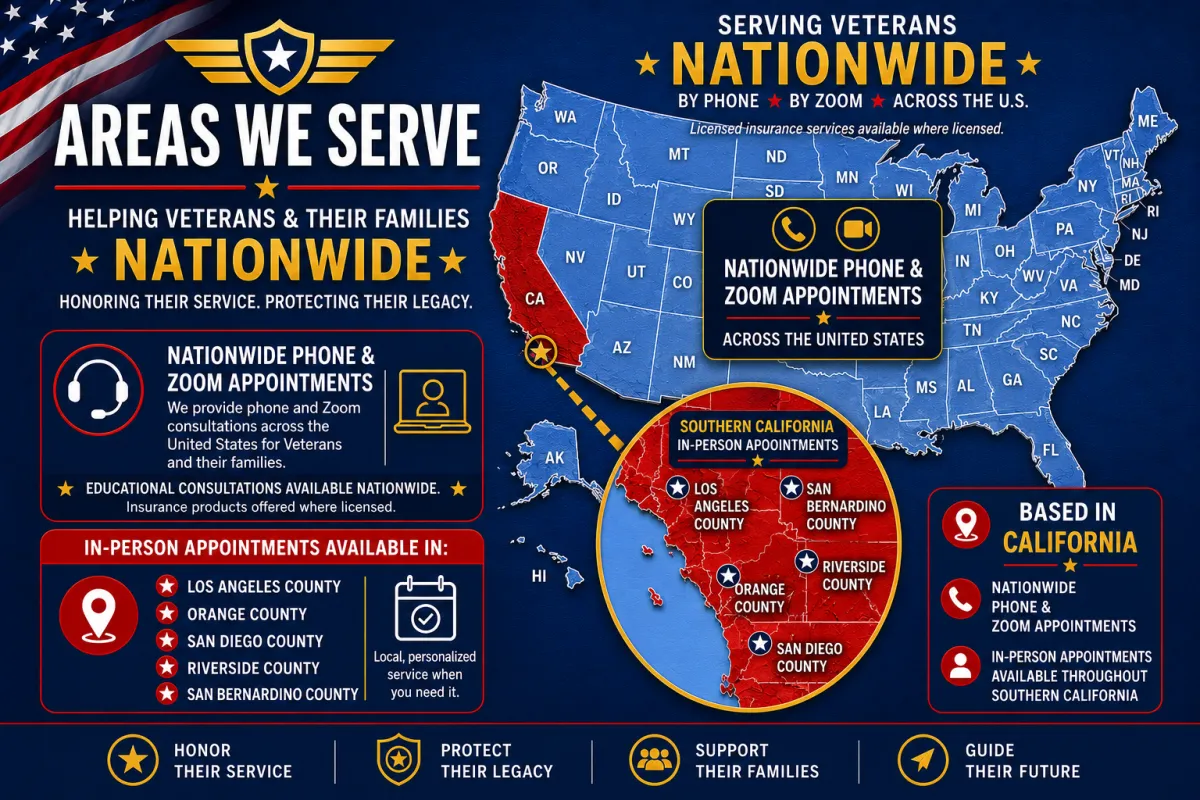
Veterans Legacy Center proudly serves veterans and their families throughout California with in-home appointments and assists families nationwide by phone and Zoom.
For those who prefer a face-to-face consultation, in-home appointments are currently available in San Diego, Orange, Los Angeles, Riverside, and San Bernardino counties.
The mission is simple: help veterans and their loved ones better understand available VA burial & cremation benefits and make informed planning decisions with dignity and compassion.
What Happens After You Request Information?
1. We’ll answer your questions about VA burial & cremation benefits.
2. We’ll explain burial and cremation planning options.
3. We’ll discuss eligibility requirements and documentation.
4. We’ll help you understand what families may still need to prepare for.
5. There is no obligation to move forward.
Helpful Documents to Have Available
DD214
Marriage certificate
Cemetery deeds
Existing funeral policies
Veteran discharge paperwork
What Veterans Burial Benefits Can you Receive?
Watch the video below to explore the veteran burial benefits available to you and your family. Learn how these VA benefits can save thousands on end-of-life expenses.
We Understand the Challenges You Face
Financial Burden: Many families face unexpected financial stress when planning a funeral or cremation service, which can become a heavy burden during an already difficult time.
Complexity of Benefits: Understanding and navigating VA burial benefits can feel confusing and overwhelming without proper guidance on eligibility, documentation, and available options.
Emotional Strain: The emotional toll of losing a loved one can be compounded by the logistical responsibilities of arranging funeral or cremation services and making important decisions quickly.
Health Issues: Many of the veterans and families we help are currently facing serious health challenges such as cancer, heart disease, kidney disease, Alzheimer’s, dementia, and other major medical conditions that can make planning ahead even more important.
Lack of Preparation: Many families simply have not had the opportunity to discuss burial or cremation wishes ahead of time, which can lead to rushed decisions and added stress during a crisis.
Need for Guidance: Veterans and their families often appreciate having someone explain available options clearly, answer questions honestly, and help them make informed decisions with dignity and compassion.
Mental Health Issues: Mental health issues, including PTSD, can affect veterans, impacting their ability to work and plan for the future.
Our Dedicated Solution
At Veterans Legacy Center, we specialize in alleviating these burdens through dedicated support and expert guidance. We help veterans and their families understand and fully utilize their entitled burial benefits, ensuring they receive every available aid to reduce financial strain and honor their service appropriately.
Services Include:
Personalized consultation to explore burial and or cremation information.
Assistance with all necessary VA burial paperwork and procedures.
Coordination with funeral homes to apply for benefits directly, reducing out-of-pocket expenses.
Ongoing support throughout the planning process.
Speak With a Veterans Family Services Counselor
Learn more about veteran burial benefits, cremation planning, and available options for you and your family.
Schedule a Call
Schedule a convenient day & time, and we'll call you for a brief consultation to discuss your options and answer any questions you may have.
Frequently Asked Questions
Common Questions Answered for your convenience.
Why is preneed funeral planning important?
Preneed funeral planning allows you to make arrangements for your final wishes in advance, relieving your loved ones of the burden of making difficult decisions during a time of grief. By preplanning your funeral, you can ensure that your wishes are honored and provide peace of mind for yourself and your family.
What if I move out of town, can I take my funeral plan with me?
Yes, if you move out of town, you can typically take your preneed funeral plan with you. Most preneed plans are transferable, which means you can transfer your existing plan to a funeral home in your new location. However, it's important to check the specific terms and conditions of your preneed agreement, as transfer policies may vary by provider.
Additionally, there might be differences in service costs between different areas, which could affect the final amount you need to settle with the new funeral home. Always inform your preneed provider about your move and discuss how the transfer process will be handled.
As a Veteran, can I prequalify for my burial at the National Cemetery?
Yes, as a veteran, you can prequalify for burial at a National Cemetery through the Department of Veterans Affairs (VA) pre-need determination of eligibility program. This program allows veterans to establish their eligibility for burial in a VA national cemetery before the time of need. By prequalifying, you ensure that your eligibility is confirmed in advance, which can provide peace of mind to you and your family and help facilitate the planning process.
To apply for a pre-need determination of eligibility, you will need to submit VA Form 40-10007, Application for Pre-Need Determination of Eligibility for Burial in a VA National Cemetery, along with a copy of your military discharge documents, typically your DD Form 214 or other equivalent documentation showing your discharge status and service dates.
The VA reviews the application and, if eligible, issues a decision letter that provides confirmation of your pre-need eligibility, which can be used when needed. This letter does not reserve a specific gravesite or schedule funeral services but confirms your eligibility for when the time comes.
Does the VA pay for funeral or cremation costs?
In some cases, the VA may provide a partial reimbursement for funeral and burial expenses if the veteran qualifies. However, many funeral home, cremation, transportation, and memorial service costs are not fully covered.
Who is eligible for veterans burial benefits?
Most veterans who were discharged under conditions other than dishonorable may qualify for VA burial benefits. Eligibility can depend on service history and discharge status. It's a great idea to complete the VA eligibility form for the National Cemetery to see if you & your spouse can be buried there. We can help you complete the form, Free Of Charge!
What happens if a family cannot find the veteran’s DD214?
A replacement DD214 can often be requested through the National Archives or other government resources. A funeral home or veterans service professional may help guide families through the process.
Is preplanning important for veterans and their families?
Yes. Preplanning helps families understand available benefits, gather important documents ahead of time, and reduce emotional and financial stress during a difficult time.
Are veterans burial benefits available immediately after discharge?
In most cases, yes, as long as the veteran meets eligibility requirements and received a qualifying discharge.
What costs are families still responsible for?
Depending on the situation, families may still be responsible for funeral home services, cremation or embalming, caskets or urns, flowers, obituary notices, and transportation expenses.
Can a veteran’s spouse be buried with them?
Yes. Eligible spouses and dependent children may also qualify for burial in a VA national cemetery, often at no additional cost for the cemetery space and related benefits.
What documents are needed to verify veterans burial eligibility?
The most important document is the veteran’s DD214 discharge papers. In some cases, marriage certificates or dependent documents may also be required.
What is the difference between burial and cremation benefits for veterans?
The VA provides a space in the National Cemetry for both burial and cremation. Veterans who choose cremation may still qualify for burial in a national cemetery, placement in a columbarium, or interment of cremated remains.
Can veterans receive military honors at their funeral?
Yes. Eligible veterans may receive military funeral honors, which can include the folding and presentation of the American flag and the playing of “Taps.”
What does the VA cover for my burial expenses?
The VA will cover your burial space, the vault, opening/closing, the headstone, and honors along with a Presidential Certificate and the US Flag. The spouse and a child disable dependent can be buried for Free with the Veterans at any National Cemetery worldwide.
Can veterans be buried in any cemetery?
Yes. Veterans may be buried in a private cemetery, state veterans cemetery, or VA national cemetery. Benefits available may vary depending on the cemetery chosen.
What is the difference between a national cemetery and a private cemetery?
A national cemetery is operated by the VA or federal government and includes certain veterans benefits. A private cemetery is independently owned and may involve additional costs not covered by the VA.
How can families confirm if a veteran qualifies for burial benefits?
Families can verify eligibility through the VA, a funeral home, or a veterans burial planning specialist by reviewing the veteran’s service documents.
Why should veterans families learn about benefits before they are needed?
Learning about veterans burial benefits ahead of time can help families avoid confusion, understand what is covered, prepare important documents, and make informed decisions during a difficult time.
CUSTOMER CARE
(951) 561-3676
25920 Iris Ave Ste 13A Box612
Moreno Valley, CA 92551
LEGAL
FOLLOW US



Insurance products offered through CDM Insurance Solutions (CDM Business Group LLC), License #6005408 © 2024 Veterans Legacy Center All rights reserved.