
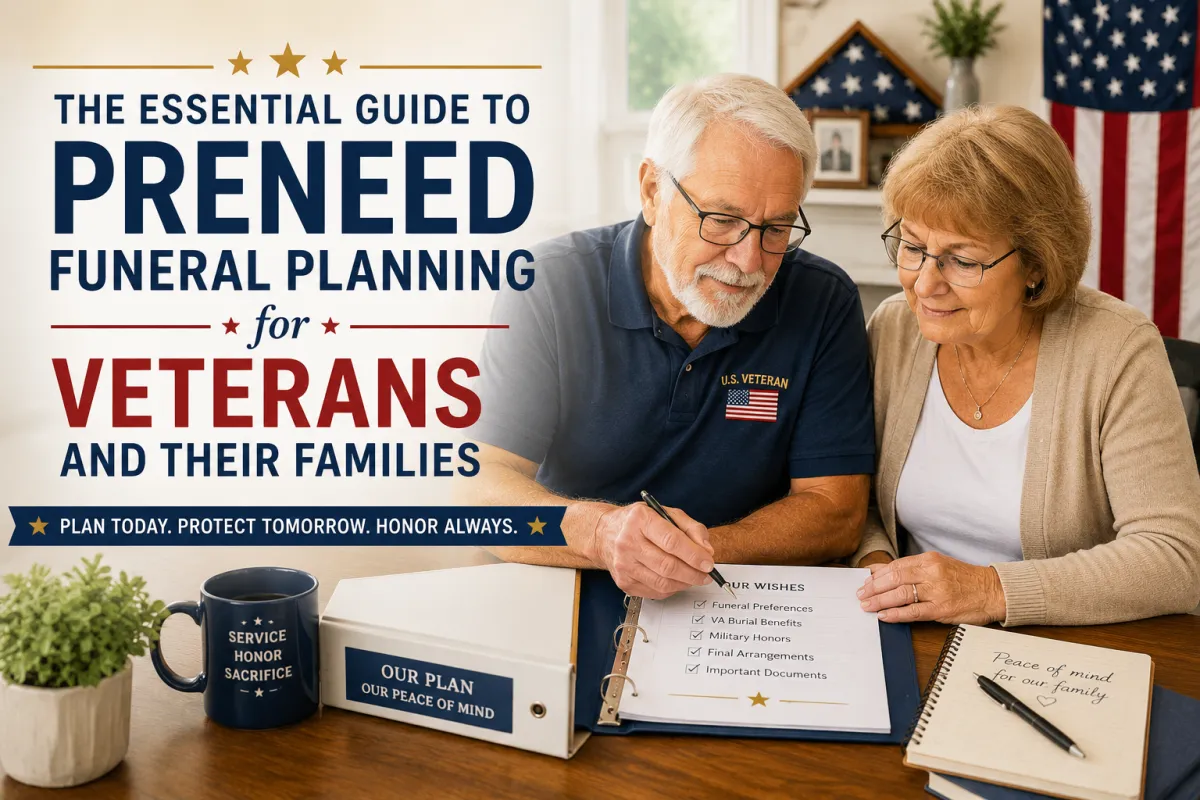
The Essential Guide to Preneed Funeral Planning for Veterans and Their Families
Table of Contents:
What Is Preneed Funeral Planning?
Why Preneed Funeral Planning Is Especially Important for Veterans
What Happens When a Veteran Passes Away?
Understanding VA Burial Benefits
What the VA Typically Does Not Cover
Rising Funeral and Cremation Costs
How Preneed Funeral Planning Works
Life Insurance vs. Preneed Funeral Planning
Documents Every Veteran Should Organize
Common Mistakes Families Make When They Don't Plan Ahead
Confusion About VA Burial Benefits
Delays During an Emotional Time
Leaving Loved Ones to Make Every Decision
A Simple Veteran Funeral Planning Checklist
Understand Your VA Burial Benefits
"Planning is bringing the future into the present so you can do something about it now." — Alan Lakein
For many veterans and their families, funeral planning is a topic that is often postponed until it becomes unavoidable. Unfortunately, waiting until a death occurs can leave loved ones scrambling to make important decisions while dealing with grief, uncertainty, and unexpected expenses.
Preneed funeral planning allows veterans to document their wishes, understand their available benefits, and make important decisions before they are needed. Whether you prefer burial or cremation, planning ahead can help reduce stress on your family while ensuring your final wishes are carried out according to your preferences.
Many veterans are surprised to learn that while the Department of Veterans Affairs (VA) provides valuable burial benefits, the VA does not typically pay for all funeral home, cremation, transportation, or memorial service expenses.
Understanding what is covered — and what is not — is one of the most important reasons to begin planning early.
In this guide, you'll learn:
• What preneed funeral planning is
• How veteran burial benefits work
• Burial and cremation planning options
• Common mistakes families make when they don't plan ahead
• Documents every veteran should organize
• How to help protect your family from unnecessary stress and financial burden
If you are new to veteran funeral planning, you may also find our Veterans Legacy Center resource library helpful. Families can access educational guides, planning checklists, and our free Order of Calls Guide to help prepare for the future.
What Is Preneed Funeral Planning?
Preneed funeral planning is the process of making funeral, cremation, memorial, and cemetery decisions before they are needed.
Instead of leaving these decisions to loved ones during an emotional time, veterans can document their wishes in advance and ensure family members understand exactly what they want.
Preneed planning may include:
• Burial or cremation preferences
• Funeral home or crematory selection
• Cemetery preferences
• Veteran burial benefit eligibility
• Military funeral honors requests
• Memorial service details
• Funding arrangements
• Important document organization
Many families choose preneed planning because it allows them to make informed decisions calmly and thoughtfully rather than under the pressure of an unexpected loss.
Why Preneed Funeral Planning Is Especially Important for Veterans
Veterans have access to unique benefits that most civilians do not receive. However, these benefits are often misunderstood.
Eligible veterans may qualify for:
• Burial in a VA National Cemetery
• A government headstone or marker
• Military Funeral Honors
• A United States burial flag
• A Presidential Memorial Certificate
• Perpetual care at a National Cemetery
While these benefits are valuable, they generally do not cover many funeral home services, cremation expenses, transportation costs, flowers, obituary notices, or memorial receptions.
This is one reason many veteran families choose to create a funeral plan ahead of time so there are fewer surprises later.
For more information about VA burial benefits, visit:
https://www.va.gov/burials-memorials/
Veterans Burial & Cremation Benefits Planning
What Happens When a Veteran Passes Away?
One of the most common concerns families have is simply knowing what to do first.
If a veteran passes away unexpectedly, family members often find themselves making urgent decisions while trying to locate military records, funeral plans, insurance information, and burial instructions.
To help families navigate this process, Veterans Legacy Center created a free Order of Calls Guide that outlines who should be contacted and in what order.
Having these instructions prepared in advance can significantly reduce stress and confusion for surviving family members.
Understanding VA Burial Benefits
Many veterans and their families are surprised to learn that the Department of Veterans Affairs (VA) provides several valuable burial and memorial benefits for eligible veterans.
Depending on eligibility, veterans may qualify for:
A government-issued headstone or grave marker
A Presidential Memorial Certificate
A United States burial flag
Military Funeral Honors, including the folding and presentation of the flag and the playing of "Taps"
Burial in a VA National Cemetery
Opening and closing of the grave
Ongoing care of the gravesite in a National Cemetery
These benefits can provide significant value to veteran families and ensure military service is honored with dignity and respect.
External Resource: VA Burial Benefits
https://www.va.gov/burials-memorials/
What the VA Typically Does Not Cover
One of the most common misconceptions is that the VA pays for all funeral expenses. In reality, many costs may still be the responsibility of the family.
Depending on the circumstances, families may still need to pay for:
Funeral home services
Cremation services
Caskets or cremation containers
Transportation of remains
Obituaries
Flowers
Memorial receptions
Certain cemetery expenses outside the National Cemetery system
Rising Funeral and Cremation Costs
Funeral and cremation expenses have steadily increased over time. While costs vary by location and services selected, many families are surprised by the total expense of burial, cremation, transportation, memorial services, and cemetery-related costs.
Planning ahead gives families time to:
Compare available options
Understand potential costs
Document personal wishes
Reduce financial stress on surviving loved ones
Avoid making rushed decisions during a difficult time
For many veterans, preplanning provides peace of mind knowing important decisions have already been made.
How Preneed Funeral Planning Works
Preneed funeral planning allows individuals to make funeral, burial, or cremation arrangements before they are needed.
In many cases, veterans can document their wishes, select preferred services, and establish funding arrangements ahead of time. This helps ensure family members are not left guessing about important decisions during an emotional period.
Common planning decisions include:
Burial or cremation
Funeral or memorial service preferences
Cemetery selection
Veteran burial benefits coordination
Military honors requests
Final disposition instructions
Payment Options
Many preneed arrangements allow families to either pay in full or make payments over time, depending on the provider and plan selected.
Some individuals prefer to fund arrangements immediately, while others choose installment options that fit comfortably within their budget.
What If You Move?
One question veterans' frequently ask is:
"What happens if I move to another state?"
Many preneed arrangements include portability features that may allow benefits or funding to be transferred to another funeral provider if you relocate. Because transfer rules vary between providers and states, it is important to review your specific agreement before making any decisions.
Planning ahead helps ensure your wishes can still be honored regardless of where you eventually reside.
Life Insurance vs. Preneed Funeral Planning
One of the most common questions veteran families ask is whether life insurance alone is enough to cover funeral and cremation expenses.
The answer depends on your goals.
Life Insurance
Life insurance is designed to provide financial support to surviving family members after a death occurs. The death benefit is typically paid to a named beneficiary, who can then use the funds for funeral expenses, mortgage payments, living expenses, debts, or other financial needs.
While life insurance can be extremely valuable, it does not usually document funeral wishes, coordinate veterans' burial benefits, or make funeral arrangements on your behalf.
Without a plan in place, family members may still need to make difficult decisions regarding:
Burial or cremation
Funeral home selection
Military funeral honors
Cemetery arrangements
Memorial services
Obituary notices
Preneed Funeral Planning
Preneed funeral planning focuses on documenting and organizing your final wishes before they are needed.
Depending on the arrangement selected, a preneed plan may help families:
Document burial or cremation preferences
Coordinate veteran burial benefits
Organize important documents
Reduce uncertainty for loved ones
Potentially protect against future funeral cost increases
Many families use both life insurance and preneed planning together. Life insurance can help provide financial support to survivors, while preneed planning helps ensure important funeral and memorial decisions have already been addressed.
Documents Every Veteran Should Organize
One of the most valuable things a veteran can do for their family is organize important records before they are needed.
Families often experience delays and unnecessary stress simply because critical documents cannot be located during an emotional time.
Important documents may include:
DD214 or military discharge papers
Marriage certificate
Veterans' burial eligibility documentation
Life insurance policies
Trust or estate planning documents
Emergency contact information
Funeral or cremation preferences
Cemetery information
Military service records
Veterans may also consider applying for a VA Pre-Need Determination of Eligibility, which allows eligible veterans to confirm their eligibility for burial in a VA National Cemetery before the time of need.
Veteran Resource:
https://www.va.gov/burials-memorials/pre-need-eligibility/
Keeping these documents organized can make a tremendous difference for surviving family members when important decisions need to be made quickly.
Common Mistakes Families Make When They Don't Plan Ahead
Most families do not intentionally avoid funeral planning. In many cases, they simply assume there will be plenty of time to discuss these decisions later.
Unfortunately, unexpected illnesses, accidents, or sudden health changes can leave loved ones making important decisions during one of the most emotional periods of their lives.
Here are some of the most common challenges families face when no plan is in place.
Family Disagreements
One of the most common issues is uncertainty about what the veteran would have wanted.
Should they be buried or cremated?
Would they prefer a military funeral?
Where should they be buried?
Should there be a viewing, memorial service, or celebration of life?
When these wishes have never been discussed, family members are often left guessing. Different opinions can lead to confusion, disagreements, and unnecessary stress during an already difficult time.
Missing Military Documents
Many veteran benefits require proof of military service.
If family members cannot quickly locate the veteran's DD214 or other discharge documents, delays can occur when applying for burial benefits, military honors, or National Cemetery eligibility.
Planning ahead allows veterans to organize important documents in one place and ensure family members know where to find them when needed.
Related Resource:
How to Get a Copy of a Veteran's DD214
Confusion About VA Burial Benefits
Many families mistakenly believe the Department of Veterans Affairs pays for all funeral and cremation expenses.
While the VA provides valuable burial benefits for eligible veterans, many funeral-related expenses may still be the responsibility of the family.
Learning about these benefits ahead of time helps families make informed decisions and avoid unexpected financial surprises.
Financial Stress
Funeral and cremation expenses can create an unexpected financial burden for surviving family members.
Without a plan in place, loved ones may be forced to make important financial decisions quickly while coping with grief.
Even simple planning conversations can help families better understand available options, anticipated costs, and potential funding sources.
Delays During an Emotional Time
When no instructions exist, family members often spend valuable time searching for paperwork, contacting relatives, locating insurance policies, and trying to determine what the veteran wanted.
This can delay arrangements and increase stress for everyone involved.
Having a written plan and organized documents can help families move forward with confidence during a difficult time.
Leaving Loved Ones to Make Every Decision
Perhaps the greatest benefit of planning ahead is reducing the burden placed on loved ones.
Many veterans spent their lives serving and protecting others. Taking time to organize final wishes can be one final act of care for the family members left behind.
A simple conversation today can spare loved ones from making dozens of difficult decisions tomorrow.
A Simple Veteran Funeral Planning Checklist
If you're not sure where to begin, don't worry. Funeral planning does not need to happen all at once.
Many veterans start by taking a few simple steps each year until their wishes are fully documented.
Consider using the following checklist as a starting point:
Gather Important Documents
□ DD214 or military discharge papers
□ Marriage certificate
□ Life insurance policies
□ Trust or estate planning documents
□ Emergency contact information
□ Social Security information
Understand Your VA Burial Benefits
□ Confirm burial eligibility
□ Learn what benefits the VA provides
□ Discuss burial or cremation preferences with family
□ Consider applying for a VA Pre-Need Determination of Eligibility
Resource:
https://www.va.gov/burials-memorials/pre-need-eligibility/
Document Your Final Wishes
□ Burial or cremation preference
□ Preferred cemetery or memorial location
□ Military funeral honors request
□ Obituary preferences
□ Memorial service preferences
□ Religious or cultural considerations
Discuss Your Plans with Family
One of the most important steps is simply having the conversation.
Many families avoid discussing funeral planning because it feels uncomfortable. However, having these conversations now can prevent confusion and disagreements later.
Even if every detail has not been finalized, sharing your wishes with loved ones can provide tremendous peace of mind.
Keep Everything in One Place
Store important documents in a secure location and make sure trusted family members know where to find them.
Many families find it helpful to maintain a funeral planning folder containing military records, insurance information, contact numbers, and final wishes.
The more organized your information is today, the easier it will be for your family tomorrow.
Conclusion
No one likes to think about their own funeral, but planning ahead is one of the most thoughtful gifts a veteran can leave behind for their family.
Understanding your VA burial benefits, organizing important documents, documenting your final wishes, and discussing those wishes with loved ones can help reduce stress, confusion, and financial uncertainty during a difficult time.
Whether you choose burial or cremation, the goal of preneed planning is not simply to prepare for the future—it's to provide peace of mind today. By taking a few simple steps now, you can help ensure your service is honored, your wishes are respected, and your family is spared from making difficult decisions alone.
As the saying goes, "Failing to plan is planning to fail." For veterans and their families, a well-prepared plan can make all the difference when it matters most.
For additional educational resources, veteran funeral planning information, and guidance on veterans' burial benefits, explore the Veterans Legacy Center Resource Library and related articles throughout our website.