

What Happens When a Veteran Passes Away? Step-by-Step Family Guide
Table of Contents:
Step 1: Obtain the Official Pronouncement of Death
Step 2: Notify Close Family Members and Gather Important Documents
Step 3: Contact the Funeral Home or Cremation Provider
Step 4: Understand What VA Burial Benefits Cover
Step 5: Decide Between Burial or Cremation
Step 6: Report the Death to Social Security and the VA
Common Mistakes Veteran Families Should Avoid
Waiting Too Long to Apply for Benefits
Assuming the VA Covers All Funeral Expenses
Making Emotional Financial Decisions Too Quickly
Does the VA pay for cremation?
Can a spouse be buried with a veteran?
What if we cannot find the DD214?
Are military funeral honors free?
Losing a veteran loved one can feel overwhelming — especially when families are suddenly faced with funeral decisions, paperwork, VA benefits, and emotional stress all at once.
Many surviving spouses and children are unsure what the VA actually covers, what documents are needed, or what steps should happen first.
This guide was created to help veteran families understand the process step-by-step so they can make informed decisions with clarity, dignity, and support during a difficult time.
Step 1: Obtain the Official Pronouncement of Death
If the veteran passes away at home, call 911 or contact hospice care immediately so a medical professional can officially pronounce the death.
If the veteran passes away in a hospital, nursing facility, or hospice center, staff members typically handle this step for the family.
This official pronouncement is necessary before funeral arrangements, transportation, cremation, or burial planning can begin.
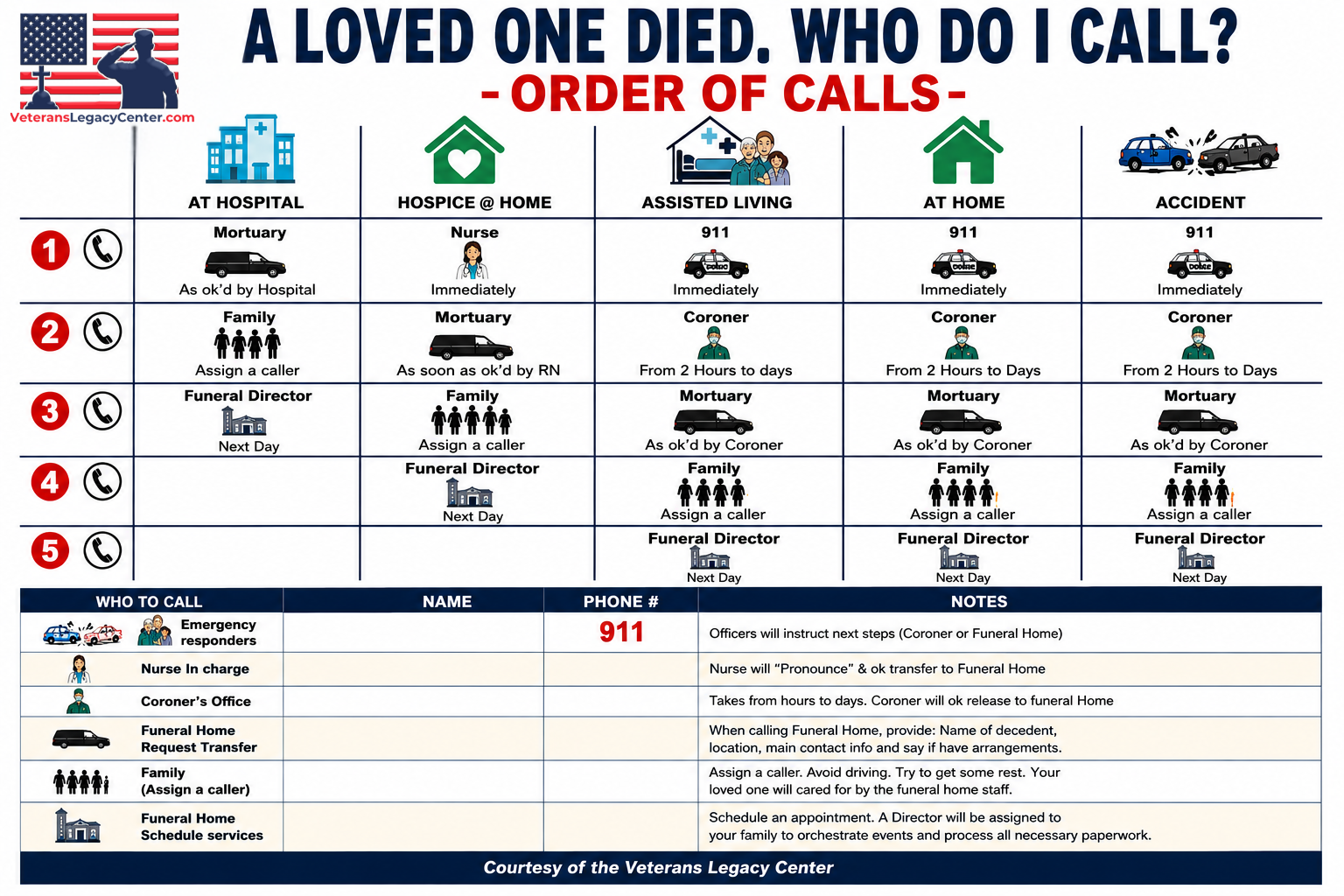
Need a Printable Copy?
Many families find it helpful to keep a copy of the Veterans Legacy Center's Order of Calls Guide on hand before a loss occurs. This free guide provides a simple step-by-step checklist showing exactly who to contact and in what order after a veteran passes away.
👉 Get Your Free Veterans Order of Calls Guide
Enter your name and email address to receive instant access to the printable guide.
Step 2: Notify Close Family Members and Gather Important Documents
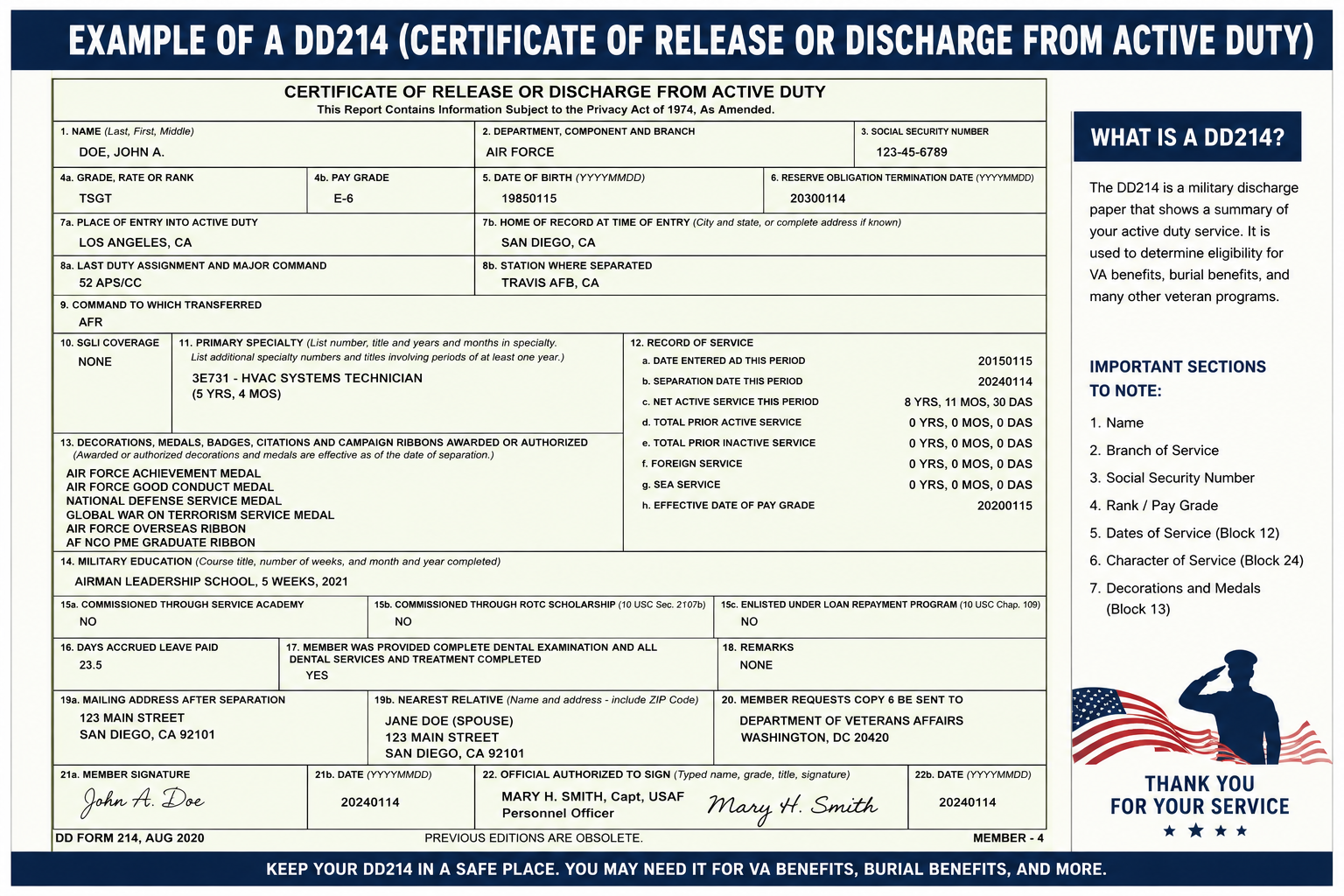
One of the most important steps is locating the veteran’s essential documents as early as possible.
Families should gather:
DD214 or military discharge papers
Social Security number
Birth certificate
Marriage certificate (if applicable)
Insurance policies
VA paperwork
Driver’s license or state ID
Prearranged funeral or cremation plans
Military service records
The DD214 is especially important because it helps verify eligibility for VA burial and memorial benefits.
If you cannot locate the DD214 immediately, don’t panic. A funeral home, county veterans' office, or veterans service organization may be able to help request replacement records.
Step 3: Contact the Funeral Home or Cremation Provider
After the official pronouncement of death, families usually contact a funeral home or cremation provider to begin arrangements.
This is often where many veteran families first learn that the VA does not fully cover all funeral and cremation costs.
In many cases, the VA may provide:
A gravesite in a national cemetery
Opening and closing of the grave
A government headstone or marker
A burial flag
Military funeral honors
However, the VA typically does not fully pay for:
Funeral home services
Cremation costs
Embalming
Transportation
Caskets
Urns
Memorial services
That is why preplanning can be so important for veteran families.
If your family is considering cremation, you may also find these helpful:
Step 4: Understand What VA Burial Benefits Cover
Many families are surprised to learn that veteran burial benefits depend on several factors, including:
discharge status
cemetery selection
wartime service
disability status
location of burial
Eligible veterans may qualify for:
Burial in a VA national cemetery
Military funeral honors
Presidential Memorial Certificate
Burial flag
Government marker or headstone
Burial allowance reimbursement in certain situations
Military funeral honors typically include:
Folding and presentation of the American flag
Playing of Taps
Honor guard detail
Spouses and eligible dependents may also qualify for burial in certain veterans' cemeteries.
If your family is considering a traditional burial, you may also find this helpful:
Step 5: Decide Between Burial or Cremation
Today, many veteran families are choosing cremation because it can offer flexibility, simplicity, and lower costs.
Others prefer traditional burial for religious, family, or military traditions.
There is no “right” or "wrong" answer — the best choice is the one that honors the veteran’s wishes and supports the family emotionally and financially.
Important decisions may include:
National cemetery burial
Private cemetery burial
Cremation with urn placement
Scattering options
Memorial service preferences
Veteran-themed memorial products
Families often appreciate having guidance through these decisions because emotions can make planning difficult during the first few days after a loss.
Step 6: Report the Death to Social Security and the VA
Families should notify:
Social Security Administration
Department of Veterans Affairs
Insurance companies
Pension providers
Financial institutions
Some benefits stop immediately after death, while surviving spouses may qualify for ongoing support.
Possible survivor benefits may include:
Dependency and Indemnity Compensation (DIC)
Survivor pension benefits
Social Security survivor benefits
Life insurance proceeds
Keeping multiple certified copies of the death certificate can help make this process easier.
Common Mistakes Veteran Families Should Avoid
Waiting Too Long to Apply for Benefits
Some reimbursements and survivor benefits have deadlines.
Misplacing the DD214
Without discharge papers, delays often occur.
Assuming the VA Covers All Funeral Expenses
This is one of the most common misunderstandings families experience.
Making Emotional Financial Decisions Too Quickly
Families should avoid rushing large funeral purchases without understanding all available options.
Not Asking Questions
Veteran families deserve clear answers and compassionate guidance.
Frequently Asked Questions
Does the VA pay for cremation?
The VA may provide partial reimbursement or cemetery-related benefits, but families are often still responsible for cremation provider costs.
Can a spouse be buried with a veteran?
In many VA national cemeteries, eligible spouses and dependents may also qualify for burial benefits.
What if we cannot find the DD214?
A funeral home, county veterans' office, or veterans' organization may help request replacement military records or request a copy from www.va.gov/records/get-military-service-records/.
Are military funeral honors free?
Yes. Eligible veterans may receive military funeral honors at no cost.
Does every veteran qualify for burial benefits?
Eligibility depends on military service history and discharge status. To determine whether you can get buried at a National Cemetery, you can apply for pre-need eligibility determination.
Final Thoughts
The passing of a veteran is more than the loss of a loved one — it is the passing of someone who served our country with honor.
During such a difficult time, families should not have to navigate confusion and unanswered questions alone.
Understanding the steps to take after a veteran passes away can help reduce stress, avoid costly mistakes, and ensure the veteran receives the dignity and recognition they earned through their service.
The mission of the Veterans Legacy Center is to help educate veteran families about burial benefits, cremation planning, memorial options, and legacy decisions with compassion, clarity, and respect.
Thoughtful gifts can serve as a reminder that the veteran's service and sacrifice will not be forgotten. Whether you are honoring a veteran, supporting a surviving spouse, or expressing condolences to a grieving family, a military-themed remembrance gift can provide comfort during a difficult time.
View our recommended military sympathy gifts and remembrance ideas.