
Veteran Cremation Costs: What the VA Covers — and What Families Still Pay
Table of Contents:
Are Cremation Costs Different for Veterans?
Why Cremation Prices Vary So Much
Family-Owned Funeral Homes & Local Crematories
Large Corporate Funeral Homes & Private Cemeteries
Why Direct Cremation Costs Can Vary
Why Many Veterans Preplan and Prepay Cremation Services
Companies That Specialize in Preneed Funeral Planning
Questions Families Should Ask Before Choosing a Cremation Provider
Frequently Asked Questions About Veteran Cremation Costs
Does the VA pay for cremation?
Can veterans be cremated and buried in a national cemetery?
Do spouses receive burial benefits too?
Can cremation services be prepaid?
What happens to prepaid cremation funds?
Are family-owned funeral homes cheaper?
Many families assume the U.S. Department of Veterans Affairs pay for all cremation expenses for veterans. In reality, cremation costs are often similar for veterans and non-veterans — but veteran families may save thousands through VA burial benefits, national cemetery eligibility, and proper preplanning.
One of the biggest misconceptions families have is believing the VA directly covers funeral home and cremation charges. While eligible veterans may qualify for valuable burial benefits, most funeral homes, crematories, and cemeteries still charge for their professional services. The real financial advantage often comes from the veteran’s eligibility for burial in a VA national cemetery, where many major cemetery expenses may already be covered.
For example, eligible veterans — and in many cases their spouses — may receive burial space in a national cemetery at no cost, along with opening and closing of the grave, a government headstone or marker, a burial liner, and military honors. These benefits can significantly reduce the overall cost families would otherwise pay at a private cemetery.
At the same time, cremation prices can vary dramatically depending on the provider families choose. Smaller family-owned funeral homes and local crematories are often far more affordable than large corporate funeral homes and private cemeteries. Many veteran families are surprised to learn that comparing providers, understanding VA benefits, and planning ahead can potentially save thousands of dollars.
In this guide, we’ll explain how veteran cremation costs work, what the VA may cover, what families still typically pay for, and how funeral home representatives, veteran-focused planning professionals, and preneed specialists help families make informed cremation and burial decisions with confidence.
Are Cremation Costs Different for Veterans?
In most cases, funeral homes and crematories charge veterans and non-veterans' similar prices for cremation services. The actual cremation process, transportation, required permits, death certificates, and professional funeral home services are generally priced the same regardless of military service.
However, many veteran families ultimately spend far less overall because eligible veterans may qualify for burial in a VA national cemetery, allowing families to avoid many of the costly cemetery expenses commonly associated with private burial.
For non-veteran families, the total cost of cremation can increase significantly once cemetery-related expenses are added. Depending on the cemetery and location, families may need to purchase:
Cemetery property or burial space
Opening and closing of the grave or niche
A burial vault or liner
A memorial marker or headstone
Ongoing cemetery maintenance and administrative fees
These expenses can add thousands of dollars to the overall cost of final arrangements, especially at private cemeteries in larger metropolitan areas.
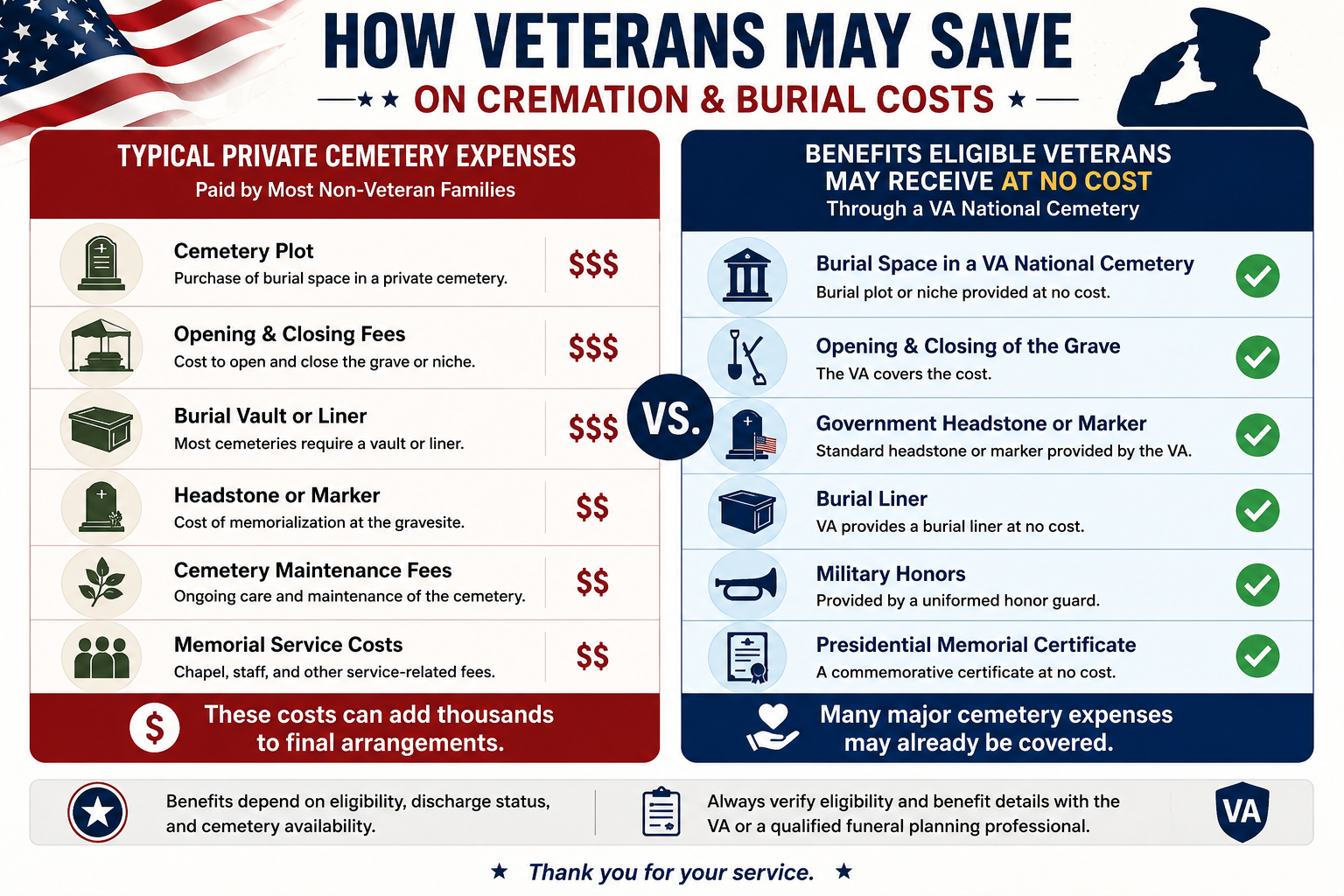
Eligible veterans, on the other hand, may receive many of these benefits at no cost through a VA national cemetery. In many cases, the veteran — and eligible spouse — may qualify for burial space, opening and closing of the grave, a government headstone or marker, a burial liner, and military honors. This is one of the primary reasons veteran families may spend substantially less overall even though the cremation provider itself may charge similar prices.
Another important factor is that many funeral homes and crematories are already familiar with veteran burial benefits and can help families coordinate the necessary paperwork, military discharge documents, and cemetery scheduling. Families who understand these benefits early in the planning process are often in a much better position to compare providers, avoid unnecessary expenses, and make informed decisions that fit both their wishes and budget.
Why Cremation Prices Vary So Much
One of the biggest surprises for many families is how dramatically cremation prices can vary from one provider to another. In some areas, the difference between providers can range from a few hundred dollars to several thousand depending on the services, facilities, and cemetery options selected.
In many cases, smaller family-owned funeral homes and local crematories are often more affordable than larger corporate funeral providers and private cemeteries. This does not necessarily mean one option is better than the other — but understanding the differences can help families make more informed decisions that fit their needs and budget.
Family-Owned Funeral Homes & Local Crematories
Many family-owned funeral homes and independent crematories focus on providing simpler and more affordable cremation services. Because these businesses often operate with lower overhead costs, they may be able to offer lower pricing compared to larger corporate providers.
Families may also find that smaller funeral homes offer:
More personalized service
Flexible cremation and memorial options
Lower-cost direct cremation packages
Greater pricing transparency
More flexibility when customizing arrangements
Some local crematories specialize primarily in direct cremation services, which can significantly reduce costs for families who do not need a large funeral ceremony or cemetery package immediately.
Another advantage is that many smaller funeral homes work closely with local veteran communities and are experienced in helping families coordinate military honors, cremation burial scheduling, and national cemetery eligibility paperwork.
Large Corporate Funeral Homes & Private Cemeteries
Larger funeral corporations and private cemetery networks often provide beautiful facilities, expanded service options, and extensive memorial packages. Companies such as Forest Lawn, Rose Hills, and Dignity Memorial are well known for their large campuses, memorial parks, chapels, and full-service funeral planning options.
However, these larger organizations also typically operate with significantly higher overhead expenses, including:
Large cemetery properties and facilities
Extensive staffing and maintenance costs
Premium memorial products and services
Cemetery property sales and development
National advertising and branding expenses
As a result, families may encounter higher prices for cremation packages, cemetery property, memorial merchandise, upgraded urns, flowers, catering, viewing services, and other add-on options.
Large funeral corporations may provide beautiful facilities and extensive services, but families often pay significantly more compared to smaller local funeral homes or crematories. For some families, the additional amenities and convenience may be worth the added cost. Others may prefer a simpler and more affordable cremation option while still receiving dignified and professional care.
Neither option is necessarily right or wrong. Every family has different preferences, traditions, and financial considerations. The most important step is understanding what services are included and comparing providers carefully before making final arrangements.
What Is Direct Cremation?
Direct cremation is the simplest and most affordable type of cremation service available. In a direct cremation arrangement, the deceased is cremated shortly after the required paperwork, permits, and authorizations are completed — typically without a public viewing, formal visitation, or traditional funeral service beforehand.
For many veteran families, direct cremation provides a practical and dignified option that keeps costs lower while still allowing families to honor their loved one in a meaningful way.
After the cremation takes place, families may choose to:
Hold a memorial service at a later date
Scatter the ashes in a meaningful location (where legally permitted)
Place the cremated remains in an urn
Bury the ashes in a national cemetery or private cemetery
Hold military honors separately from the cremation itself
One reason direct cremation has become increasingly popular across the United States is because it gives families more flexibility. Instead of feeling rushed to organize a large funeral service within a few days, families can take additional time to plan a personalized memorial when relatives and friends are available to gather.
Why Direct Cremation Costs Can Vary
Although direct cremation is generally considered the lowest-cost funeral option, pricing can still vary significantly depending on the provider and geographic area.
In lower-cost markets and smaller communities, direct cremation services may be relatively affordable compared to larger metropolitan areas where funeral homes and cemeteries operate with much higher overhead expenses. Urban areas with expensive real estate, staffing costs, and large memorial facilities often have higher cremation pricing overall.
In many cases, family-owned crematories and independent funeral homes offer some of the most affordable direct cremation options because they focus on simpler arrangements and operate with lower operating costs than larger corporate providers.
However, families should always compare what is included in the quoted price. Some providers may advertise a low base cremation price while charging additional fees for:
Transportation of the deceased
Required permits and filing fees
Death certificates
Cremation containers
Urns
After-hours transfers
Witness cremation services
Cemetery coordination
Understanding these details ahead of time can help families avoid unexpected expenses and make more informed decisions during an already emotional and stressful time.
For eligible veterans, direct cremation combined with burial in a VA national cemetery is often one of the most affordable final arrangement options available while still providing honorable and dignified burial benefits.
Why Many Veterans Preplan and Prepay Cremation Services
Many veterans and their families choose to preplan cremation services years in advance rather than leaving difficult decisions for loved ones during a time of grief. Preplanning allows families to document their wishes, compare providers carefully, and better understand the costs associated with cremation, burial, and memorial services.

For many families, preplanning also helps:
Reduce emotional stress on surviving relatives
Avoid rushed financial decisions during a crisis
Lock in selected services and arrangements
Create a clear plan for burial benefits and cemetery eligibility
Spread payments out over time in some cases
In many situations, prepaid cremation and funeral funds are held through specialized preneed insurance companies or trust arrangements designed specifically for funeral planning. These arrangements are regulated in many states and are generally designed to help protect consumer funds until services are needed.
Many families are surprised to learn that funeral homes typically cannot simply spend prepaid cremation funds immediately. Depending on the type of preneed arrangement, funds may be held in insurance-backed policies or trust accounts specifically structured to pay at the time of need.
Professionals who help families prearrange and prepay funeral services may also be required to hold special licenses depending on state laws and the type of funding being used. This helps ensure families are working with properly licensed individuals when making important end-of-life planning decisions.
Companies That Specialize in Preneed Funeral Planning
Many funeral homes and cremation providers partner with specialized insurance companies that focus on preneed funeral and cremation funding. These companies help families set aside funds specifically for future funeral expenses and, in many cases, allow payments to be spread over time.
Some of the best-known companies in the preneed industry include:
These companies work with funeral homes, crematories, cemeteries, and licensed preneed professionals throughout the United States. Depending on the arrangement selected, policies may help cover cremation services, burial expenses, memorial merchandise, cemetery costs, or other final arrangement needs.
Questions Families Should Ask Before Choosing a Cremation Provider
Before selecting a funeral home or cremation provider, families should take time to compare services carefully and ask detailed questions about pricing, veteran benefits, and what is included in the quoted cost.
Important questions may include:
Is the crematory owned and operated onsite?
What services are included in the quoted price?
Are transportation fees included?
Are there additional charges for permits or death certificates?
Does the provider help coordinate VA burial benefits?
Can cremated remains be buried in a national cemetery?
Is there an additional fee for military honors coordination?
Are there extra charges for urns, memorial services, or cemetery scheduling?
Taking time to compare providers and understand the full breakdown of costs can help families avoid unexpected expenses and make more informed decisions.
Frequently Asked Questions About Veteran Cremation Costs
Does the VA pay for cremation?
In most cases, the VA does not directly pay the funeral home or crematory for cremation services. However, eligible veterans may qualify for burial benefits that can significantly reduce overall cemetery-related costs.
Can veterans be cremated and buried in a national cemetery?
Yes. Eligible veterans may be cremated and buried in a VA national cemetery. In many cases, spouses may also qualify for burial benefits.
Is direct cremation cheaper?
Direct cremation is generally considered one of the most affordable final arrangement options because it usually does not include a public viewing or traditional funeral service beforehand.
Do spouses receive burial benefits too?
In many situations, eligible spouses and dependents may also qualify for burial in a VA national cemetery alongside the veteran.
Can cremation services be prepaid?
Yes. Many families preplan and prepay cremation services through funeral homes, insurance-funded preneed plans, or funeral trusts.
What happens to prepaid cremation funds?
Depending on the arrangement, funds are typically held in specialized preneed insurance policies or trust accounts designed to pay at the time services are needed.
Are family-owned funeral homes cheaper?
In many cases, family-owned funeral homes and local crematories may offer lower pricing compared to larger corporate funeral providers due to lower overhead costs.
Do veterans receive free cemetery space?
Eligible veterans may qualify for burial space in a VA national cemetery at no cost, along with other burial-related benefits.
Conclusion
Understanding veteran cremation costs can help families make more informed and confident decisions during one of life’s most difficult moments. While cremation providers often charge veterans and non-veterans similar prices for professional services, eligible veteran families may save significantly through VA burial benefits and national cemetery eligibility.
Taking time to compare funeral providers, understand what services are included, and explore preplanning options may help families reduce unnecessary financial stress while ensuring their loved one receives dignified and honorable final arrangements.
At Veterans Legacy Center, our goal is to help educate veterans and their families about cremation planning, burial benefits, and the options available so families can make informed decisions with confidence.