
How to Comfort a Family After the Loss of a Veteran (Complete Guide)
Table of Contents:
Understanding the Unique Loss of a Veteran
What Should You Say to a Family Who Has Lost a Veteran?
Offer Specific Help Instead of General Offers
Attend the Funeral or Memorial Service
Meaningful Sympathy Gifts for Military Families
Helping Families Navigate Veterans Benefits
Understanding Burial and Cremation Options
Understanding the Grieving Process
Helpful Resources for Families Grieving the Loss of a Veteran
The loss of a veteran affects an entire family. Whether the veteran served during wartime or peacetime, their service often becomes a meaningful part of their identity and family legacy. When a veteran passes away, surviving spouses, children, grandchildren, and close friends are left to navigate both the emotional impact of the loss and the many practical responsibilities that follow.
If someone you care about has recently lost a veteran, you may be wondering how you can help. Many people struggle to find the right words or worry about saying the wrong thing. The reality is that meaningful support rarely requires perfect words. Simple acts of kindness, practical assistance, and genuine compassion can make an enormous difference during one of life's most difficult seasons.
This guide explains how to support a grieving military family, what challenges they may face after a veteran passes away, and resources available through the Department of Veterans Affairs.
Understanding the Unique Loss of a Veteran
Military service often shapes a person's life long after their time in uniform ends. Veterans frequently carry the values, friendships, experiences, and memories of their service throughout their lives. For many families, military service becomes part of their family story.
When a veteran dies, surviving loved ones are often grieving more than the loss of an individual. They are also reflecting on a lifetime of service, sacrifice, achievements, and memories.
In addition to emotional grief, families are often faced with immediate responsibilities such as:
Contacting a funeral home or cremation provider
Obtaining death certificates
Reporting the death to government agencies
Applying for VA benefits
Organizing military funeral honors
Managing financial and legal matters
Supporting elderly surviving spouses
Understanding these challenges can help you provide support that is both compassionate and practical.
What Should You Say to a Family Who Has Lost a Veteran?
Many people avoid contacting a grieving family because they fear saying the wrong thing. However, most families appreciate sincere expressions of sympathy.
Simple statements are often best:
"I'm sorry for your loss."
"Thank you for your loved one's service."
"Your family is in my thoughts and prayers."
"Please let me know how I can help."
"He will not be forgotten."
Avoid trying to explain the loss or offering clichés. Your presence and willingness to listen are often more meaningful than anything you can say.
Offer Specific Help Instead of General Offers
One of the most common phrases grieving families hear is:
"Let me know if you need anything."
While well intentioned, grieving families often don't know what they need or may feel uncomfortable asking for help.
Instead, offer specific assistance such as:
Bringing dinner one evening
Driving a family member to appointments
Watching children
Walking pets
Picking up groceries
Helping organize paperwork
Assisting with funeral arrangements
Specific offers are much easier for families to accept and can reduce stress during an overwhelming time.
Attend the Funeral or Memorial Service
Showing up matters.
Veteran funeral services often include traditions that honor military service, such as:
The playing of Taps
Folding and presentation of the United States flag
Military honor guard ceremonies
Rifle salutes when authorized
Burial in a VA national cemetery
Even if you did not know the veteran well, attending the service demonstrates respect for both the veteran and their family.
Supporting a Surviving Spouse
Many surviving spouses suddenly find themselves managing responsibilities that were previously shared.
They may be dealing with:
Financial decisions
Benefit applications
Transportation needs
Medical appointments
Household responsibilities
Loneliness and isolation
The weeks and months following the funeral are often when support is needed most. Consider checking in regularly, making phone calls, sending cards, or inviting them to community events.
Meaningful Sympathy Gifts for Military Families
Many people want to send something meaningful after the loss of a veteran but are unsure what is appropriate.
Thoughtful options may include:
Military remembrance gifts
Patriotic floral arrangements
Sympathy flowers
Memorial keepsakes
Personalized photo gifts
Sympathy baskets
Memorial garden stones
These gifts can serve as lasting reminders of a veteran's life, service, and legacy.
Helping Families Navigate Veterans Benefits
One of the most valuable ways you can help a grieving family is by directing them to reliable information about veterans' benefits.
Many families are unaware that eligible veterans may qualify for:
Burial in a VA national cemetery
Military funeral honors
Government headstones or markers
Presidential Memorial Certificates
Burial allowances
Survivor benefits
The VA also provides guidance on how families should report the death of a veteran and what steps should be taken afterward.
Helpful VA Resource:
How to Report the Death of a Veteran to the VA.
https://www.va.gov/resources/how-to-report-the-death-of-a-veteran-to-va/
Understanding Burial and Cremation Options
One of the first decisions many families face after the loss of a veteran is whether burial or cremation is the right choice. Both options may qualify for certain VA burial and memorial benefits, and the decision often comes down to the veteran's wishes, family preferences, religious beliefs, and budget. Taking time to understand the available options can help families make informed decisions during an emotional period.
If you're unsure where to start, we encourage you to read our complete guide:
This guide explains veterans' cremation benefits, urn options, burial at a national cemetery after cremation, military funeral honors, and important planning considerations for veterans and their families.
Understanding the Grieving Process
Grief affects everyone differently.
Some people experience sadness, anger, confusion, anxiety, guilt, or difficulty concentrating. Others may appear calm at first and struggle more intensely months later.
There is no right or wrong way to grieve.
Patience, understanding, and consistent support often provide more comfort than advice.
Helpful Resources for Families Grieving the Loss of a Veteran
Families do not have to navigate grief alone. Several resources are available through the Department of Veterans Affairs and related organizations.
VA Bereavement Counseling
The VA offers bereavement counseling through Vet Centers for eligible surviving spouses, children, and parents.
https://www.va.gov/burials-memorials/bereavement-counseling/
Understanding Grief and Loss
The VA's National Center for PTSD provides educational resources about grief, mourning, and coping after the loss of a loved one.
https://www.ptsd.va.gov/understand/related/related_list_grief.asp
Helping Someone Through Grief
The VA also offers guidance for friends and family members who want to support someone who is grieving.
https://www.ptsd.va.gov/family/how_help_grief.asp
Veterans Crisis Line
If grief leads to feelings of hopelessness or emotional crisis, confidential support is available 24 hours a day.
Dial 988 and Press 1
https://www.veteranscrisisline.net/
Survivor Benefits Information
Learn more about Dependency and Indemnity Compensation (DIC) and other survivor benefits available through the VA.
Free Veterans Order of Calls Guide
If you would like a simple checklist showing who families should contact and what steps they should take after a veteran passes away, visit our Resource Library and request your free copy of the Veterans Order of Calls Guide.
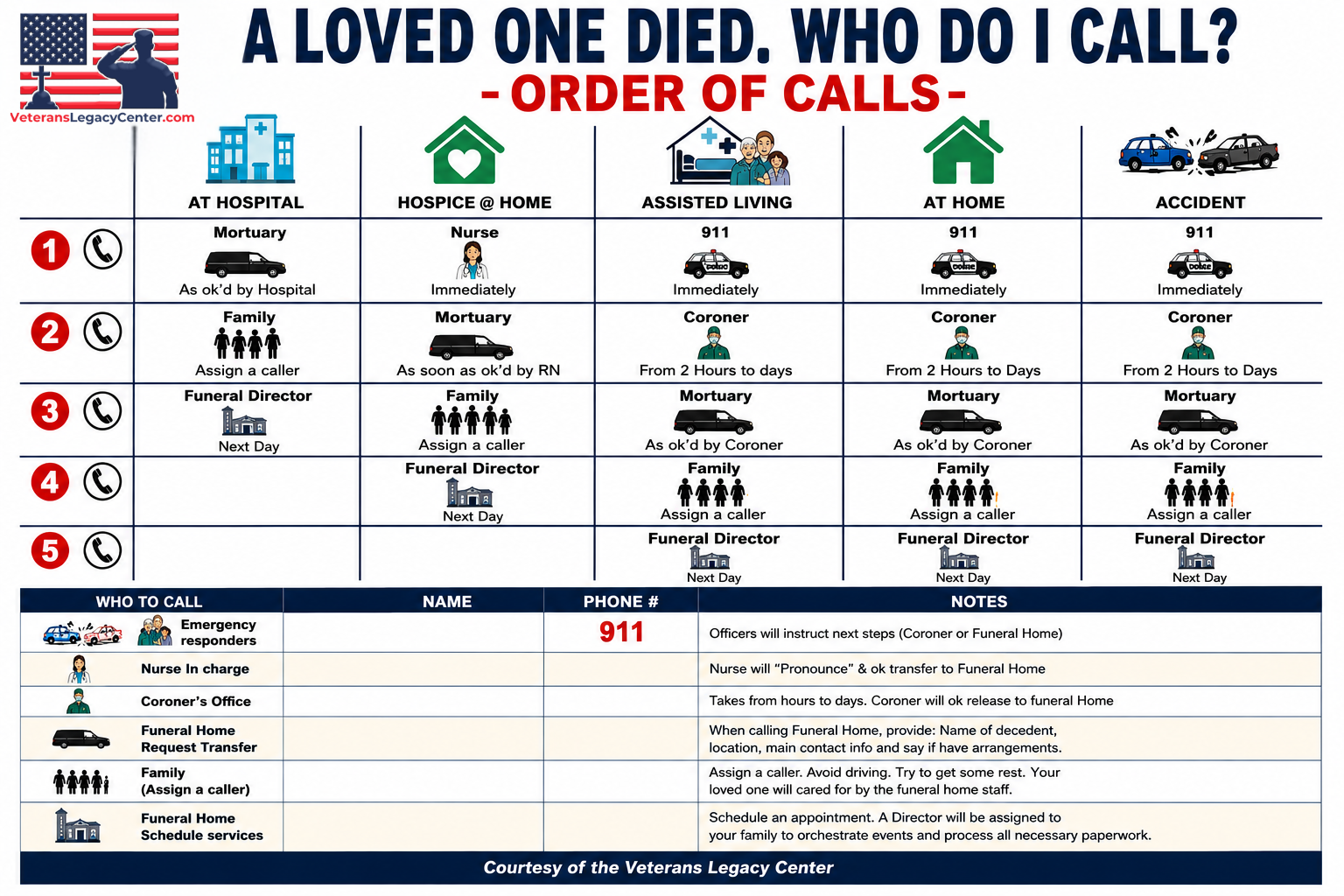
The guide provides a clear step-by-step roadmap that families can print and keep on hand before a loss occurs.
Final Thoughts
Supporting a family after the loss of a veteran is not about having perfect answers. It is about being present, offering practical help, honoring the veteran's service, and continuing to care long after the funeral has ended.
Small acts of kindness can leave a lasting impact and help ensure that the veteran's service and sacrifice are remembered for generations to come.