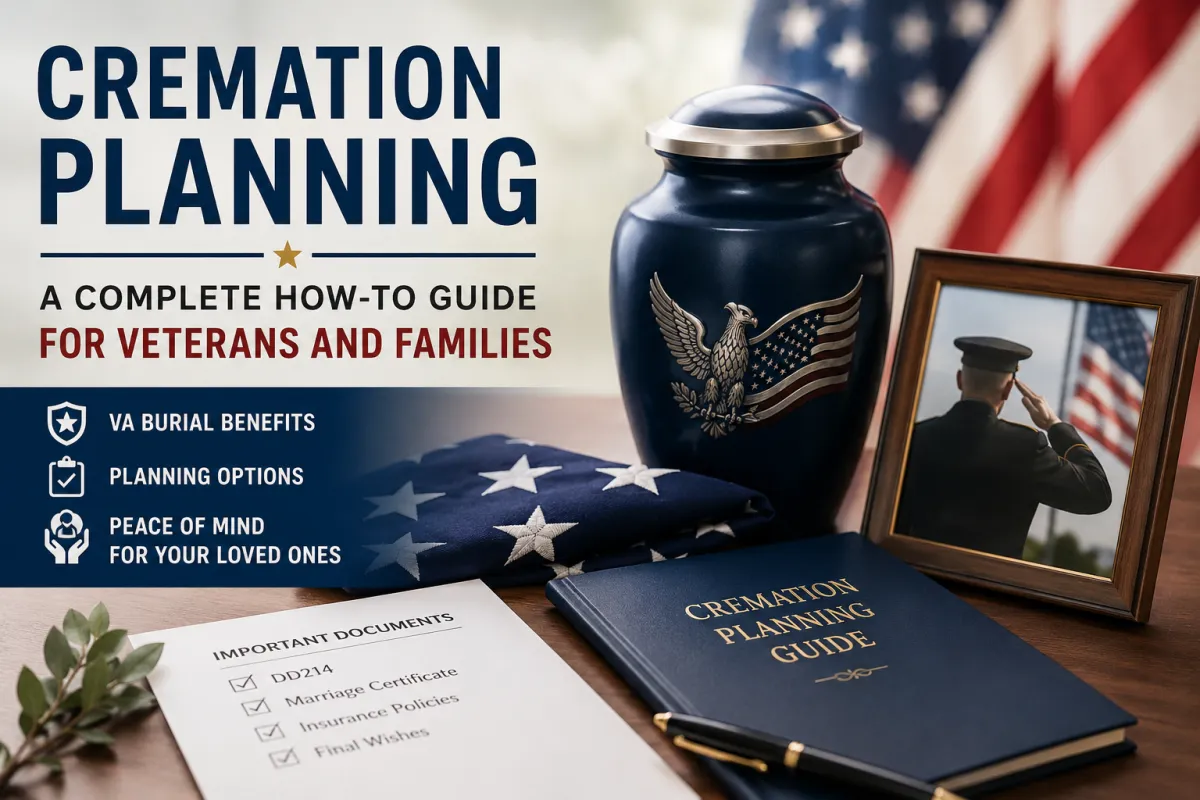
Cremation Planning: A Complete How-To Guide for Veterans and Families
Table of Contents:
What Decisions Are Involved in Cremation Planning?
Preplanning vs. At-Need Arrangements
Flexibility for Memorial Services
VA Cemetery Burial Eligibility Still Available with Cremated Remains
Step-by-Step Cremation Planning Guide
Step 1: Decide Between Burial or Cremation
Step 2: Choose a Cremation Provider
Funeral Home vs. Direct Cremation Provider
Step 3: Understand Veterans Burial Benefits
Important Veteran Planning Documents
Military Honors and Flag Benefits
Funding Options for Cremation Services
Common Cremation Planning Decisions
Medicaid and Funeral Preplanning
Mistakes Families Make When They Don’t Plan Ahead
Frequently Asked Questions About Cremation Planning
Does the VA pay for cremation?
Can veterans be buried after cremation?
How long does cremation planning take?
For many veteran families, cremation planning is not just about funeral arrangements — it’s about protecting loved ones from stress, confusion, and unexpected financial burdens during one of the hardest moments in life.
Unfortunately, many families discover too late that the VA does not fully cover funeral and cremation costs. Without a clear plan in place, surviving spouses and children are often left making rushed decisions while grieving.
Cremation planning helps veterans and their families prepare ahead of time with clarity, confidence, and peace of mind.
Today, many families work with organizations such as Neptune Society and Smart Cremation to arrange direct cremation services and cremation preplanning. In addition to national providers, many local funeral homes and independent preneed specialist also help families navigate cremation arrangements, veterans' burial benefits, and memorial planning. These professionals often work closely with cemeteries, crematories, and funeral service providers to help families understand their options ahead of time.
For veterans and their families, cremation planning can be especially important because many people mistakenly believe the VA pays for all funeral and cremation expenses. In reality, the U.S. Department of Veterans Affairs may provide certain burial benefits for eligible veterans — such as burial in a national cemetery, military honors, a government headstone, and a burial flag — but the VA typically does not fully cover funeral home or cremation service costs. VA Burial Benefits Overview
Because of this, some families choose to work with veteran-focused planning organizations that help coordinate cremation planning, compare local providers, and explain available burial benefits. In many cases, these arrangements can be significantly less expensive than walking directly into a funeral home without any planning in place. By working with multiple providers, veteran-focused organizations are often able to help families compare options, understand pricing, and receive discounted cremation services designed specifically for veterans and their spouses.
Another reason many families consider cremation preplanning is financial protection. Cremation and funeral costs continue to rise over time, and some providers allow families to prepay or secure today’s pricing for future services. Planning ahead also gives families time to gather important documents such as a DD214, marriage certificate, insurance policies, and personal wishes before a difficult situation occurs.
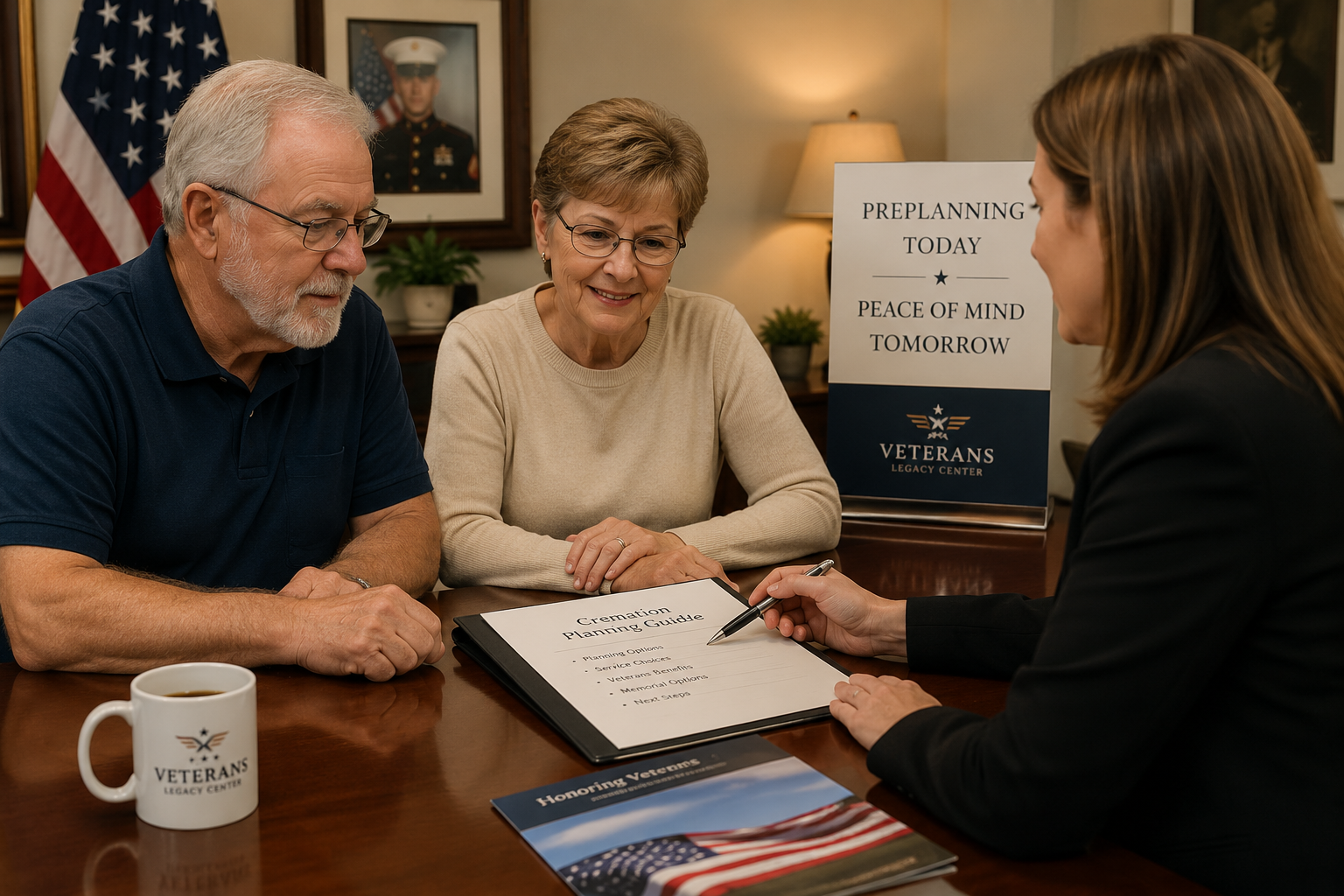
In this guide, we’ll walk through how cremation planning works, the decisions families should consider, common mistakes to avoid, and how veterans can prepare their loved ones with a clear cremation plan ahead of time.
What Is Cremation Planning?
Cremation planning is the process of making funeral, cremation, and memorial decisions ahead of time before they are needed. Instead of leaving loved ones to make difficult choices during a stressful and emotional situation, cremation planning allows individuals and families to organize their wishes in advance and better understand the financial and logistical aspects of cremation services.
For many veterans and retirees, cremation planning is part of a larger preplanning process that may include funeral arrangements, cemetery decisions, veterans burial benefits, memorial preferences, and financial preparation. Some families simply document their wishes, while others choose to formally prearrange or prepay through a funeral home, crematory, or veteran-focused planning organization.
What Decisions Are Involved in Cremation Planning?
Many people are surprised to learn how many important decisions are involved when someone passes away. Cremation planning helps families think through these choices calmly and clearly ahead of time rather than making rushed decisions during a difficult moment.
Some of the most common cremation planning decisions include:
Choosing between direct cremation or a traditional funeral service
Selecting a funeral home or cremation provider
Deciding whether there will be a viewing, memorial service, or celebration of life
Determining where the cremated remains will be placed
Choosing an urn or memorial keepsake
Planning for military honors and veterans' burial benefits
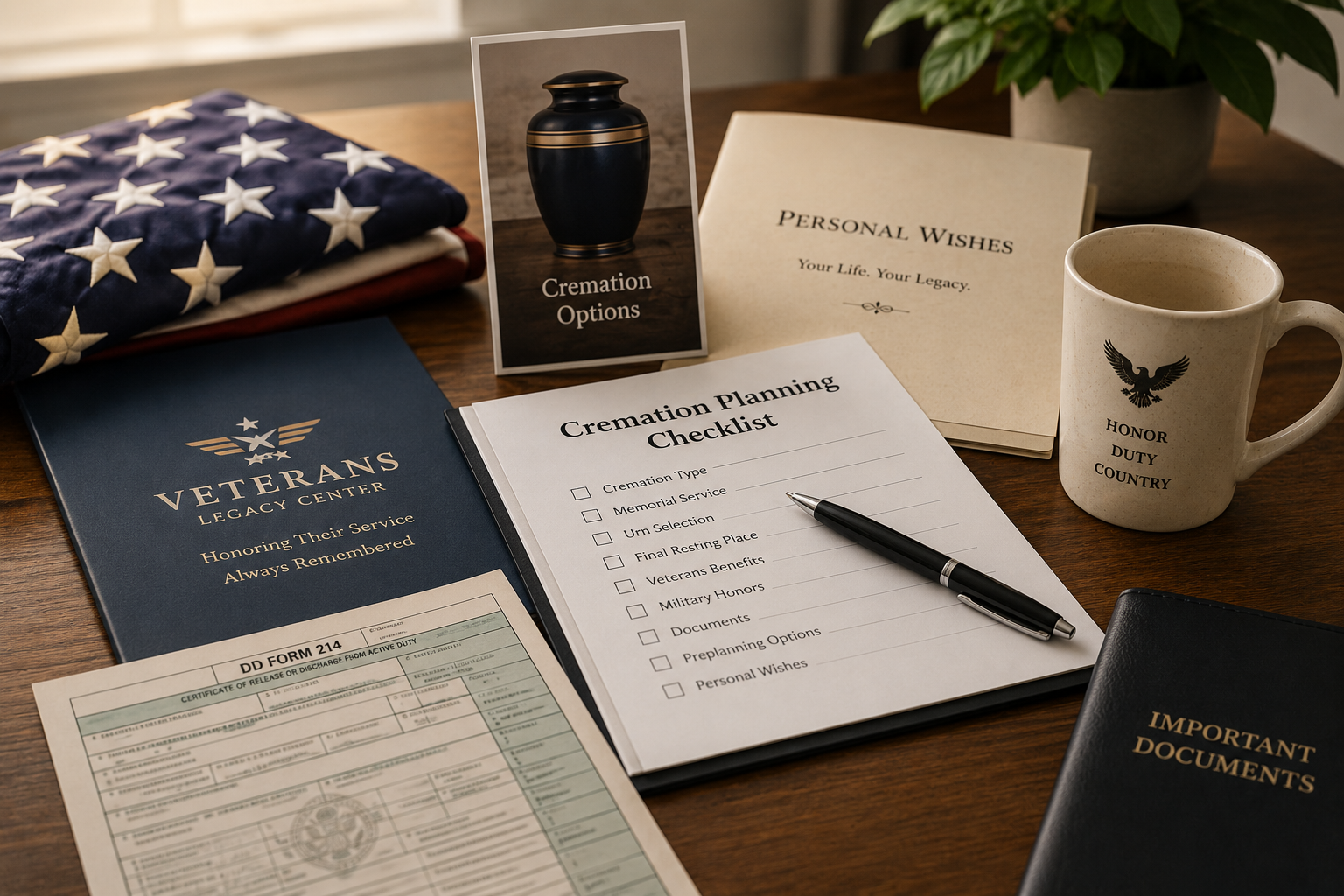
Gathering important documents such as the DD214 and marriage certificate
Deciding whether to prepay for cremation services
For veterans, cremation planning may also involve deciding whether the veteran wishes to be buried in a national cemetery, placed in a columbarium niche, or memorialized in another meaningful way. Many veteran families also want to ensure military honors, a burial flag, and veteran markers are coordinated properly ahead of time.
Preplanning vs. At-Need Arrangements
One of the biggest differences families experience is the difference between preplanning cremation arrangements ahead of time and making “at-need” arrangements after a death has already occurred.
An at-need arrangement happens when a family suddenly has to contact a funeral home or cremation provider after losing a loved one. During this time, families are often grieving, emotional, overwhelmed, and forced to make major financial and personal decisions very quickly. In many cases, families may not know what their loved one wanted, what benefits are available, or what cremation services should reasonably cost.
Preplanning is different because the decisions are made calmly ahead of time before a crisis occurs. Families have more time to compare providers, understand veterans' burial benefits, discuss personal wishes, and create a plan that fits their financial situation. In many cases, preplanning through organizations that work with multiple funeral homes and crematories can also help families reduce costs compared to making rushed at-need decisions without guidance.
This is one reason many funeral homes, crematories, and veteran-focused organizations encourage families to begin the conversation early. Preplanning is not about expecting the worst — it is about protecting loved ones from unnecessary stress, confusion, and financial pressure later on.
Why Families Choose Cremation
Families choose cremation for many different reasons. For some, it is a personal preference. For others, it may be because cremation offers more flexibility, simplicity, and affordability compared to traditional burial. In recent years, cremation has become increasingly common throughout the United States as more families look for meaningful and practical ways to honor their loved ones.

Simplicity
Many families feel cremation simplifies the planning process during an already emotional time. Cremation arrangements can often be more straightforward than traditional burial arrangements, especially when families choose direct cremation services. In many cases, families can still hold a funeral, visitation, memorial service, or celebration of life either before or after cremation takes place.
Another reason families appreciate cremation planning is because it allows them to clearly document personal wishes ahead of time. Working with a funeral director, cremation provider, or preneed specialist can help families create a personalized plan that reflects the veteran’s values, military service, religious beliefs, and memorial preferences.
Affordability
Affordability is another major reason many families choose cremation. Traditional burial costs can become expensive once cemetery property, caskets, vaults, opening and closing fees, flowers, transportation, and memorial services are added together. Cremation is often a lower-cost alternative, although pricing can still vary depending on the services and merchandise selected.
Planning ahead can also help protect families financially. Many funeral homes and cremation providers allow families to prearrange and prefund cremation services ahead of time, reducing the likelihood of unexpected financial stress later on.
Flexibility for Memorial Services
One misconception about cremation is that families cannot still have a meaningful memorial or funeral service. In reality, cremation offers a great deal of flexibility when it comes to honoring a loved one’s life.
Families may choose:
A traditional funeral service before cremation
A memorial service after cremation
A religious or military ceremony
A celebration of life at a meaningful location
A simple direct cremation with no formal service
Cremation also gives families more flexibility in timing. Memorial services can be scheduled days or even weeks later, allowing loved ones more time to travel and gather together.
VA Cemetery Burial Eligibility Still Available with Cremated Remains
Many veteran families are surprised to learn that choosing cremation does not eliminate eligibility for VA burial benefits. Eligible veterans who are cremated may still qualify for burial or interment in a national cemetery, along with military honors, a government headstone or marker, a burial flag, and a Presidential Memorial Certificate.
Depending on the national cemetery and available space, cremated remains may be:
Buried in an in-ground gravesite
Placed in a columbarium niche
Placed in a garden niche
Scattered in designated cremation gardens
This flexibility allows veteran families to combine cremation with meaningful military honors and a permanent place of remembrance for future generations.
Step-by-Step Cremation Planning Guide
Step 1: Decide Between Burial or Cremation
The first step in cremation planning is deciding what type of final arrangement best fits your wishes, beliefs, and family preferences. Some families prefer traditional burial, while others choose cremation because of its simplicity, affordability, and flexibility.
When making this decision, consider:
Family traditions and wishes
Religious or cultural beliefs
Whether military honors are important
Desired memorial or funeral services
Final resting place preferences
Overall budget and planning goals
For veterans, it’s important to know that choosing cremation does not affect eligibility for most VA burial benefits. Eligible veterans may still qualify for military honors, a burial flag, and interment at a national cemetery.
Talking through these decisions ahead of time can help reduce stress and uncertainty for loved ones later on.
Step 2: Choose a Cremation Provider
After deciding on cremation, the next step is choosing a cremation provider that fits your family’s needs, budget, and preferences. Some families work directly with a local funeral home, while others choose a direct cremation provider or a veteran-focused planning organization that works with multiple funeral homes and crematories.
Funeral Home vs. Direct Cremation Provider
Traditional funeral homes often provide a full range of services, including visitations, memorial services, burial arrangements, transportation, and cremation coordination. This may be a good option for families who want a more traditional service or additional in-person support.
Direct cremation providers typically focus on simple cremation arrangements without a formal funeral service. These services are often more affordable and may work well for families looking for a simpler option.
Some veteran-focused organizations also help families compare providers and understand veterans' burial benefits while coordinating services with local funeral homes and crematories.
Questions Families Should Ask
Before choosing a provider, families should take time to ask questions and understand exactly what is included in the cremation arrangements.
Some helpful questions include:
What services are included in the price?
Are transportation and permits included?
Is the cremation performed locally?
Are there additional fees for urns or memorial services?
Can the provider help with veterans' burial benefits?
Are payment or preplanning options available?
What documents will the family need?
Taking time to compare options ahead of time can help families avoid unnecessary stress and unexpected costs later on.
Step 3: Understand Veterans Burial Benefits
Before making final cremation arrangements, it is important for veterans and their families to understand what benefits may be available through the U.S. Department of Veterans Affairs. Many families are surprised to learn that while the VA may provide certain burial and memorial benefits, the government generally does not pay for the actual cremation services, funeral home charges, urns, or memorial merchandise.
Important Veteran Planning Documents
✅ DD214
✅ Marriage certificate
✅ Insurance policies
✅ Cemetery preferences
✅ Emergency contacts
✅ Final wishes
What the VA May Cover
Eligible veterans may qualify for several burial and memorial benefits through the VA, including:
Burial in a national cemetery
Opening and closing of the grave
A grave liner or vault
A government headstone or marker
A burial flag
Military funeral honors
A Presidential Memorial Certificate
Benefits can vary depending on eligibility, discharge status, and whether burial takes place in a national or private cemetery.
National Cemetery Eligibility
Veterans who choose cremation may still qualify for burial or interment at a national cemetery if eligible. Depending on the cemetery and available space, cremated remains may be:
Buried in an in-ground gravesite
Placed in a columbarium niche
Placed in a garden niche
Scattered in designated cremation gardens
Families should also make sure important documents such as the DD214 are available when arrangements are needed.
Military Honors and Flag Benefits
Eligible veterans may receive military funeral honors, which can include the folding and presentation of the American flag and the playing of Taps. Families may also receive a burial flag and a Presidential Memorial Certificate in honor of the veteran’s service.
Funding Options for Cremation Services
Because the VA generally does not fully cover funeral home or cremation expenses, many families choose to plan ahead financially. Preplanning can help reduce stress on loved ones and prevent families from having to make rushed financial decisions during a difficult time.
There are several ways families may choose to fund cremation or funeral arrangements ahead of time.
Preneed Insurance Policies
A preneed insurance policy is a type of life insurance specifically designed to help cover funeral or cremation expenses included in a preneed contract. The policy benefit is typically paid directly to the funeral home or cremation provider at the time of need, helping reduce the financial burden on surviving family members.
Many families prefer this option because arrangements and funding are handled ahead of time, making the process simpler for loved ones later on. In some cases, guaranteed-issue policies may also be available, meaning individuals can often qualify without extensive medical underwriting.
Funeral Trusts
Some funeral homes place preneed funds into a funeral trust or escrow account according to state regulations. A portion or all of the money paid toward the cremation or funeral arrangements is held by a qualified financial institution until the services are provided.
This allows families to set aside funds specifically for future funeral or cremation expenses while helping ensure the money is protected and used for its intended purpose.
Traditional Life Insurance
Some families plan to use a traditional life insurance policy to help pay for cremation or funeral expenses. However, unlike a preneed policy, the death benefit is usually paid to the beneficiary rather than directly to the funeral home.
Because death certificates and claim processing can take time, families may still need to pay funeral or cremation expenses upfront before insurance proceeds are released. Traditional life insurance also does not typically lock in today’s funeral or cremation pricing the way some preneed arrangements may.
Common Cremation Planning Decisions
Medicaid and Funeral Preplanning
For some families, cremation planning is not only about documenting final wishes — it may also be part of long-term financial and Medicaid planning. In certain situations, prepaid funeral or cremation arrangements may help individuals protect assets while preparing for future care needs.
In many states, funds placed into an irrevocable funeral trust or irrevocable preneed contract are generally not counted as available assets for Medicaid qualification purposes. Because these contracts cannot typically be canceled or withdrawn for other uses, they may allow families to legally set aside money specifically for funeral or cremation expenses ahead of time.
This can be especially important for seniors who may eventually require long-term care or nursing home assistance through Medicaid, known as Medi-Cal in California. Families should always consult with a qualified funeral professional, elder law attorney, or financial advisor regarding Medicaid eligibility and state-specific rules.
Traditional life insurance policies may be treated differently. In some cases, the cash value of a life insurance policy could still count as an asset depending on the policy type and amount.
Urn Selection
Choosing an urn is another important part of cremation planning. Urns come in many different styles, sizes, and materials depending on how the cremated remains will be stored, displayed, buried, or shared among family members.
Temporary vs. Permanent Urns
Many cremation providers include a temporary container for the cremated remains. Families may later choose a permanent urn designed for home display, burial, placement in a columbarium, or scattering purposes.
Permanent urns are available in a wide range of materials including:
Wood
Metal
Marble
Glass
Ceramic
Biodegradable materials
Veteran-Themed Urns
Many veteran families choose patriotic or military-themed urns to honor their loved one’s service. These urns may feature:
American flag designs
Military branch emblems
Eagle engravings
Veteran inscriptions
Personalized nameplates
Keepsake Urns
Some families choose keepsake urns, memorial jewelry, or small remembrance pieces designed to hold a small portion of cremated remains. Keepsake urns can allow multiple family members to share in remembering a loved one in a personal way.
Mistakes Families Make When They Don’t Plan Ahead
Many families avoid talking about cremation or funeral planning because the conversation feels uncomfortable. Unfortunately, waiting until a death occurs can create additional stress, confusion, and financial pressure during an already emotional time.
Emotional Overspending
When arrangements must be made unexpectedly, families are often forced to make quick decisions while grieving. Without a plan in place, it can become difficult to compare options carefully or stay within a comfortable budget.
Family Disagreements
One of the most common problems families face is uncertainty about what their loved one would have wanted. Different opinions regarding burial, cremation, memorial services, or final resting place decisions can sometimes lead to unnecessary disagreements among family members.
Delays Obtaining Benefits
Veteran families may also experience delays if important documents such as the DD214, discharge papers, or marriage certificates cannot be located quickly. Planning ahead helps ensure these documents are organized and accessible when they are needed.
Confusion About Final Wishes
Without clear instructions, loved ones are often left making difficult decisions on their own. Cremation planning gives families peace of mind by clearly documenting wishes ahead of time and helping reduce uncertainty during a difficult period.
Frequently Asked Questions About Cremation Planning
Does the VA pay for cremation?
No, the VA generally does not fully pay for cremation services or funeral home expenses. However, eligible veterans may still qualify for burial benefits such as military honors, a burial flag, and burial in a national cemetery.
Can veterans be buried after cremation?
Yes. Veterans who choose cremation may still qualify for burial or interment in a national cemetery if eligible. Cremated remains may be buried in a gravesite, placed in a columbarium niche, or interred in designated cremation areas depending on availability.
How long does cremation planning take?
Cremation planning can take as little as one meeting with a funeral home, cremation provider, or preneed specialist. Some families simply document their wishes, while others choose to fully prearrange and prefund their cremation services ahead of time.
What is direct cremation?
Direct cremation is a simple cremation process that takes place without a formal viewing or funeral service beforehand. This option is often chosen by families looking for a more affordable or simplified arrangement. Memorial services may still be held after cremation if desired.
Can ashes be buried in a national cemetery?
Yes. Eligible veterans may have their cremated remains buried or interred at a national cemetery, and there spouses too. Depending on the cemetery, cremated remains may be placed in a columbarium niche, buried in a gravesite, or scattered in designated cremation gardens.
Conclusion
Cremation planning is ultimately about protecting the people you love and ensuring your wishes are clearly understood ahead of time.
Whether you are planning for yourself, a spouse, or a parent, starting the conversation early can help reduce stress, avoid confusion, and give families peace of mind during a difficult time.
Explore our additional veteran cremation and burial planning resources below or speak with a local planning professional to better understand your options.
You can also explore our related resources:
Additional Resources: