
Turning 65? Medicare Guidance for Veterans & Their Families
Understanding Medicare, VA Health Care, TRICARE, Medicare Advantage, Medicare Supplement Insurance, Vision, and Dental Coverage.

VA Benefits Explained

Medicare Options

Dental & Vision Coverage

For You & Your Spouse

Get clear answers. Make informed decisions. Protect your benefits. We're here to help you every step of the way.

We Honor Veterans
Proud to serve those who served our country.

Independent Guidance
We work for you, not the insurance companies.

Veteran Focused
Specializing in the unique needs of veterans and families.
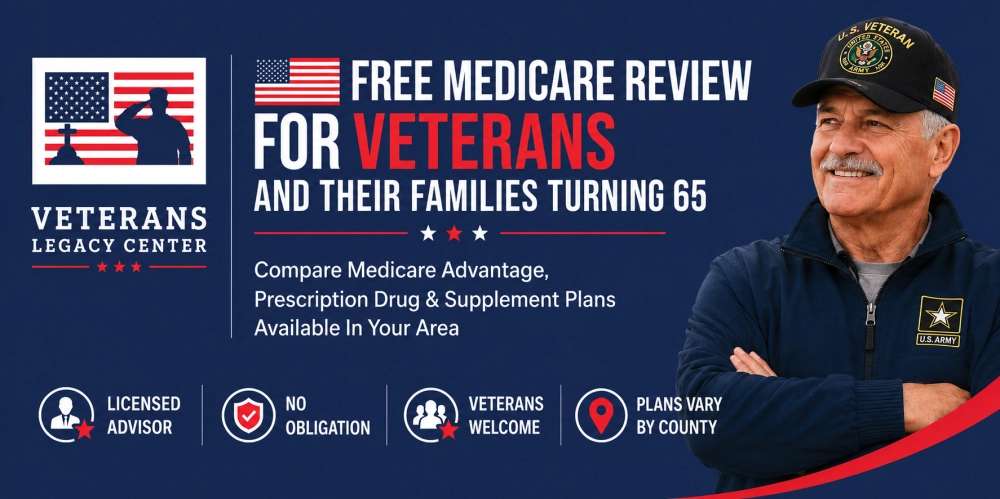
FREE MEDICARE REVIEW
Get personalized guidance on Medicare, VA Health Care, TRICARE, Medicare Advantage, Medicare Supplement Insurance, and Dental Coverage—all at no cost.
✓ Medicare Guidance
✓ VA Benefits Education
✓ TRICARE Information
✓ Coverage for Veteran Spouses
✓ No Cost Consultation
🔒 Your information is secure and will never be sold or shared.

VA Health Care vs. Medicare:
What's the Difference?
Many veterans are surprised to learn that VA health care and Medicare are separate systems. While both can provide valuable health coverage, they operate under different rules and may cover different providers, facilities, and services.
Understanding how these benefits work together is one of the most important decisions veterans and their spouses face when approaching age 65.
Many veterans choose to enroll in Medicare even when they are eligible for VA health care. Depending on your healthcare needs, travel plans, provider preferences, and future goals, having both benefits may provide additional flexibility and peace of mind.
Every veterans' situation is different, which is why understanding your options before turning 65 is so important.

We're Here to Help Veterans and Their Families
Our team is committed to helping you understand your benefits and make confident healthcare decisions.
Do Veterans Need Medicare Part B?
If you're eligible for VA health care, you may wonder whether Medicare Part B is necessary. While every veteran's situation is unique, many veterans benefit from enrolling in Medicare Part B when they turn 65. Here's why:

More Provider Choices
Medicare Part B gives you access to doctors and specialists outside the VA system.

Covers What the VA Doesn't
Part B helps cover care that the VA may not provide, like certain tests, specialists, and procedures.

Peace of Mind When You Travel
Medicare provides coverage when you're away from VA facilities or traveling outside your local area.

Avoid Late Enrollment Penalties
Enrolling at 65 helps you avoid lifelong penalties and higher monthly premiums.

Protection Against Future Changes
Enrolling in Medicare Part B when you're first eligible helps ensure you have coverage options available if your healthcare needs change in the future.


Bottom Line
Medicare Part B works hand-in-hand with your VA benefits. It gives you greater flexibility, more options, and added protection for your health and future.

Turning 65?
Let's make sure you have the right coverage in place.
When Medicare Part B May Not Be Necessary
Some veterans may choose to delay Medicare Part B if they:
Have qualifying employer group health coverage
Are still actively working
Receive benefits through a spouse's employer plan
Qualify for a Special Enrollment Period based on current employer coverage
Because every situation is different, it's important to review your options before making a decision.
Before delaying Medicare Part B, it's important to understand the rules.
Delaying enrollment without qualifying coverage could result in permanent late enrollment penalties and gaps in coverage.
A personalized Medicare review can help you determine the best option for your situation.
Medicare Advantage Plans for Veterans
Medicare Advantage (Part C) plans are offered by leading insurance companies. Each plan includes all of the benefits of Medicare Part A and part B— and may offer additional benefits.
Benefits May Include:
Dental Coverage
Vision Benefits
Hearing Benefits
Prescription Drug Coverage
Over-the-Counter Allowances
Transportation Benefits

Dental Coverage

Vision Benefits

Hearing Benefits

Prescription Drug Coverage

Over-the-Counter Allowances

Transportation Benefits


Many Medicare Advantage Plans can help fill the gaps in coverage and work alongside your VA benefits.
Many Medicare Advantage Plans can help fill the gaps in coverage and work alongside your VA benefits.
Get a Plan That Fits Your Needs
Our team can help you compare plans from multiple top-rated insurance companies.
Let us Help You Find the Right Medicare Advantage Plan
A personalized review can help you choose with confidence.
TRICARE For Life and Medicare
TRICARE For Life (TFL) is health coverage for military retirees and their eligible family members. It works together with Medicare to help cover your healthcare costs after age 65.

Medicare Part A Required
You must have Medicare Part A to be eligible for TRICARE For Life.

Medicare Part B Required
Medicare Part B is also required. TRICARE For Life does not replace medicare.

TRICARE becomes secondary coverage
After Medicare pays its share, TRICARE For Life helps cover the remaining costs.

Claims Coordinated Automatically
Most claims are coordinated between Medicare and TRICARE For Life.

Good News for Military Retirees
Once enrolled in Medicare Parts A and B, TRICARE For Life can provide comprehensive coverage with very little paperwork for beneficiaries.
FAQs
Do Veterans Need Medicare If They Have VA Health Care?
Yes. VA health care and Medicare are separate programs. Enrolling in Medicare can provide access to non-VA providers and help protect against future coverage gaps.
Is Medicare Part B Required for Veterans?
Medicare Part B is not required to keep VA health care benefits. However, many veterans choose to enroll in Part B at age 65 to avoid late enrollment penalties and gain access to additional healthcare providers.
Can Veterans Have Both Medicare and VA Health Care?
Yes. Many veterans use both Medicare and VA health care. Medicare can be used outside the VA system, while VA benefits can continue to be used at VA facilities.
What Happens If I Decline Medicare Part B?
If you decline Part B and do not have other qualifying employer coverage, you may face a lifetime late enrollment penalty if you decide to enroll later.
Do Veterans Need a Medicare Advantage Plan?
Not always. Some veterans are satisfied with VA health care and Original Medicare, while others choose Medicare Advantage plans for additional benefits such as dental, vision, hearing, prescription coverage, transportation, and fitness benefits.
Can I Have TRICARE For Life and Medicare Advantage?
Yes. Military retirees with TRICARE For Life may also enroll in a Medicare Advantage plan if it meets their needs. The right choice depends on your healthcare usage and provider preferences.
Is Medicare Free for Veterans?
Most people receive Medicare Part A premium-free if they have sufficient work history. Medicare Part B requires a monthly premium regardless of veteran status.
Are Spouses of Veterans Eligible for Medicare?
Yes. Medicare eligibility is generally based on age, disability status, and work history. Spouses may also qualify for TRICARE or other military-related healthcare benefits depending on their circumstances.

Still Have Questions About Medicare?
Schedule Your Free Medicare Review

CUSTOMER CARE
(951) 561-3676
25920 Iris Ave Ste 13A Box612
Moreno Valley, CA 92551
LEGAL
FOLLOW US



Insurance products offered through CDM Insurance Solutions (CDM Business Group LLC), License #6005408 © 2024 Veterans Legacy Center All rights reserved.